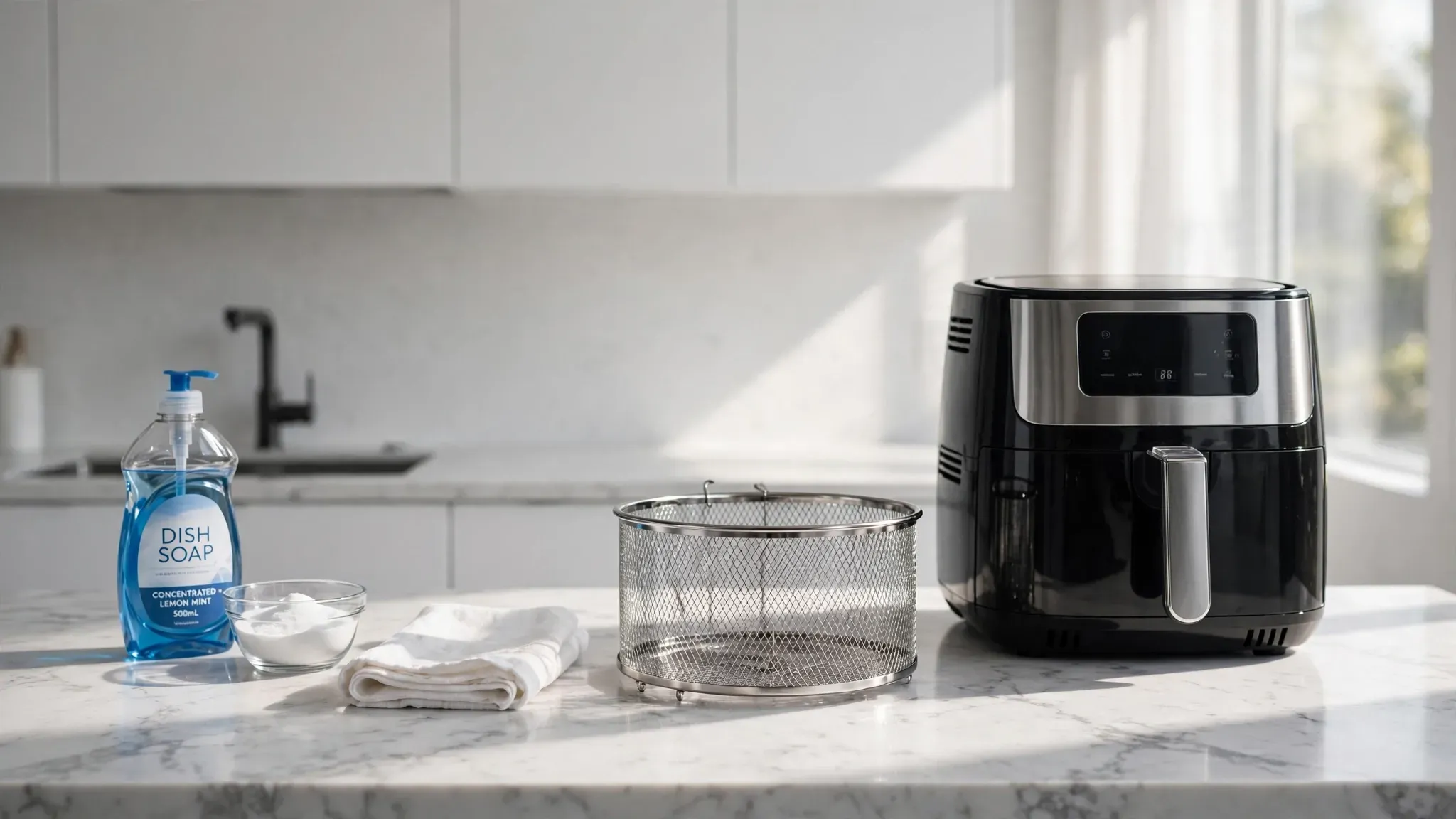
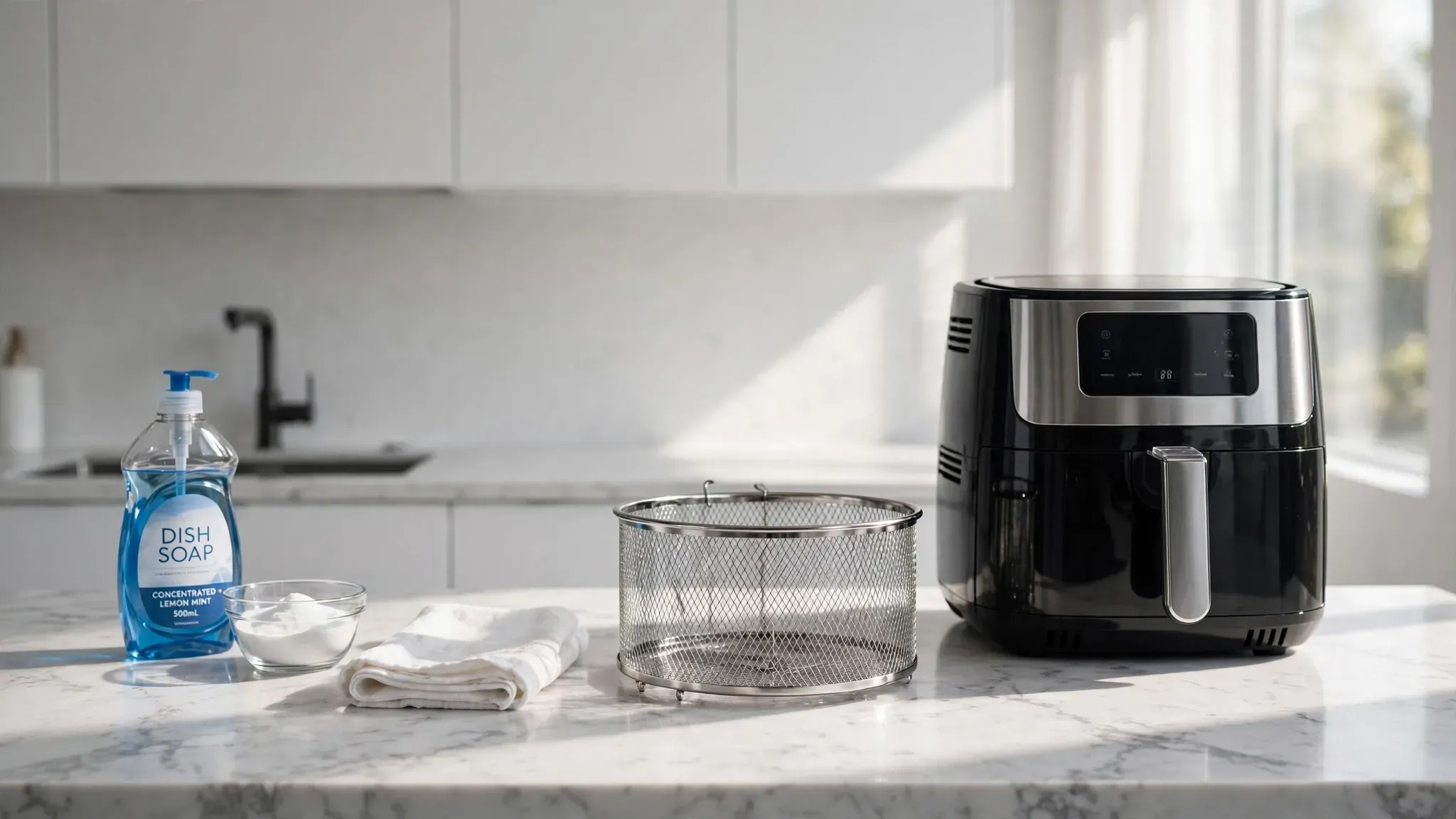
How to Clean a Greasy Air Fryer Basket in Under 5 Minutes
I remember the smell of burnt french fries filling my kitchen last Tuesday. I opened my appliance to find a thick layer of brown sludge covering the bottom grate. Many people dread this exact moment after cooking a fast dinner. The thought of scrubbing baked-on fat ruins the joy of a quick meal entirely. You probably leave the dirty basket on the counter until the next day. I used to do the exact same thing when I felt lazy. Scrubbing takes too much time and ruins the non-stick surface fast. I decided to find a better way to handle this daily chore. I tested dozens of soaps and scrubbing pads over three long months. Most common advice falls completely flat when faced with real burnt bacon fat. I finally found an exact routine that takes less than 300 seconds. You only need hot water and two basic pantry items to win. I will walk you through every single step of this exact routine. You can rescue your appliance right now without breaking a sweat.
You will clean your appliance basket perfectly in under five minutes. This routine removes stubborn burnt fat using just dish soap and baking soda. I have tested this exact sequence on months of accumulated kitchen grime. You will skip harsh chemicals and protect your delicate non-stick metal coating. We replace endless scrubbing with a fast and safe chemical reaction. Hot water does most of the heavy lifting for you while you wait. You will save money on expensive specialty cleaners sold in stores. Your kitchen will stop smelling like old fried food after dinner. I broke this routine down into seven exact, numbered steps. You can follow along with a dirty basket sitting in your sink right now.
1. Gather Your Everyday Kitchen Supplies
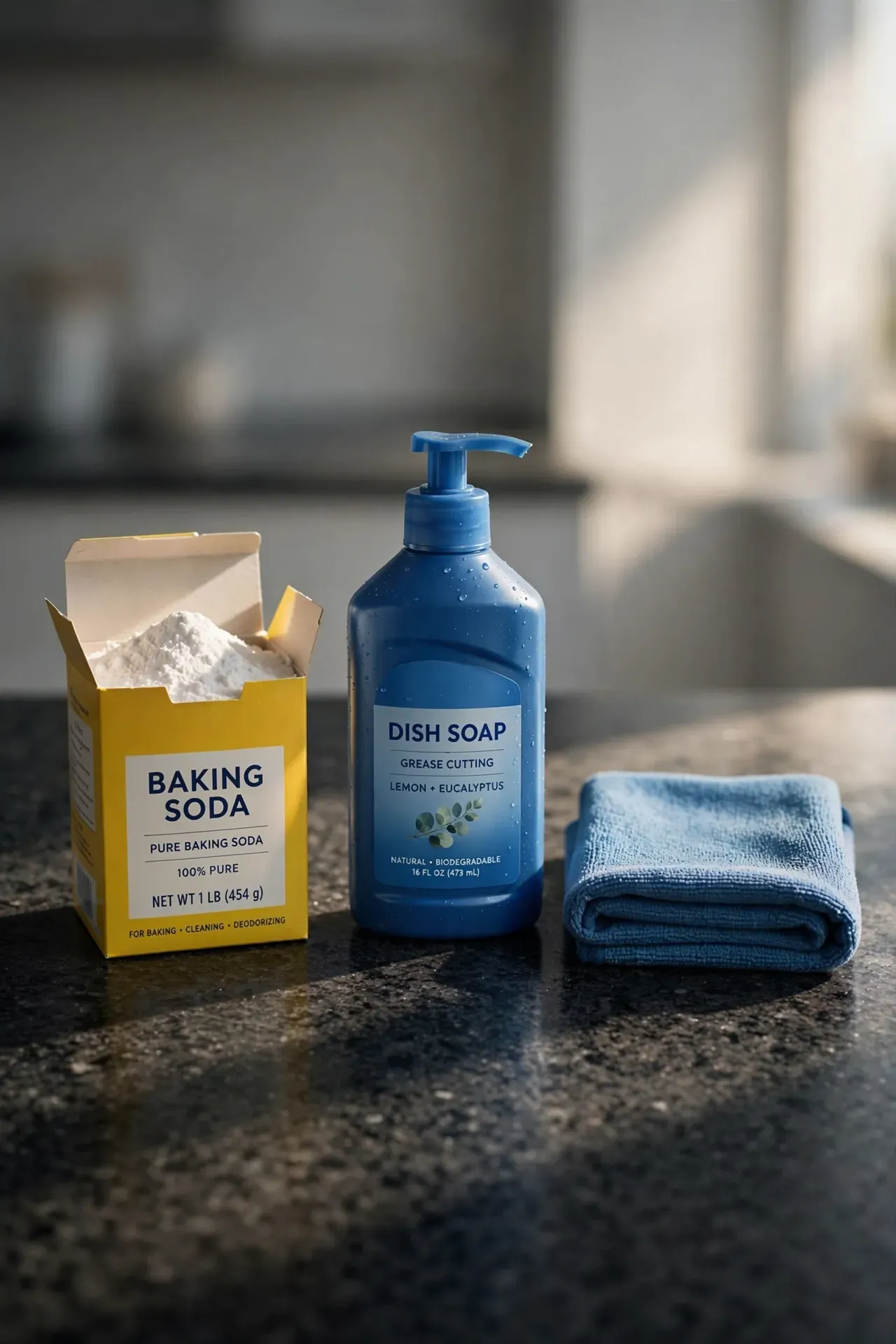
You need three specific things to make this work. Grab a bottle of grease-cutting liquid dish soap from your cabinet. I always reach for the blue Dawn soap for this dirty job. It breaks down animal fats faster than natural alternative soaps. Next, find a fresh box of baking soda from your baking pantry. Baking soda acts as a gentle abrasive against heavily stuck food. It will not scratch or peel the delicate non-stick metal coating. Finally, you need a microfiber cloth or a non-scratch nylon pink sponge. Do not use steel wool or harsh green commercial scouring pads. I ruined a fifty-dollar basket using a green scrubbing pad last year. The non-stick coating peeled off into my chicken wings two days later.
Set these three items right next to your kitchen sink. Make sure your sink is empty and rinsed completely clean. A clear workspace makes the five-minute timer an absolute reality. Preparation stops you from searching for tools with wet, soapy hands. You want everything within arm's reach before the hot water starts flowing.
2. Prep the Basket with Hot Water
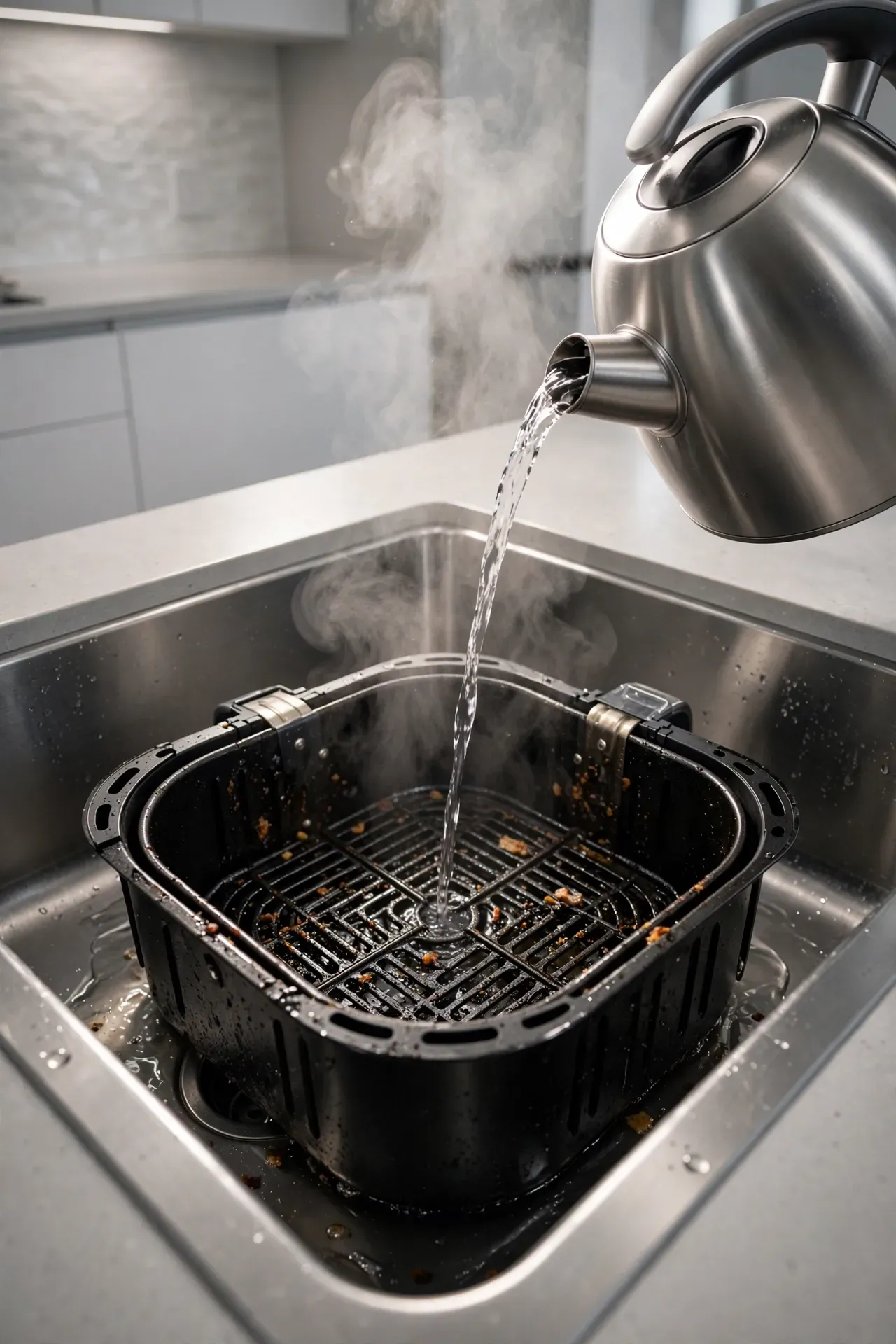
Temperature dictates everything when dealing with hardened cooking fats. Cold water causes animal fats to solidify and cling tightly to metal. You must use water as hot as you can comfortably handle safely. I prefer boiling water straight from a silver electric tea kettle. Place your dirty basket flat in the bottom of your steel sink. Pour a few drops of dish soap directly onto the bottom black grate. Slowly pour the hot water over the soapy, greasy grates. Watch the water turn cloudy as the top layer of oil melts away. The heat immediately softens the hardened crust of yesterday's fried dinner.
Do not fill the basket all the way up to the top edge. You only need enough water to submerge the bottom tray entirely. Let this hot soapy bath sit for exactly sixty seconds on the clock. I use my phone timer to stay on track and avoid waiting. This short soak forces the fat molecules to release their tight grip. Rushing this step forces you to scrub much harder later on. Patience here saves your wrists from unnecessary pain and swelling. I saw this trick cut my physical labor completely in half. Hot water does the physical work while you wait nearby. Dump the dirty water down the drain after one minute passes. The basket will still look dirty, but the crust is soft. You are now ready for the actual physical dirt removal.
3. Apply the Grease-Cutting Paste
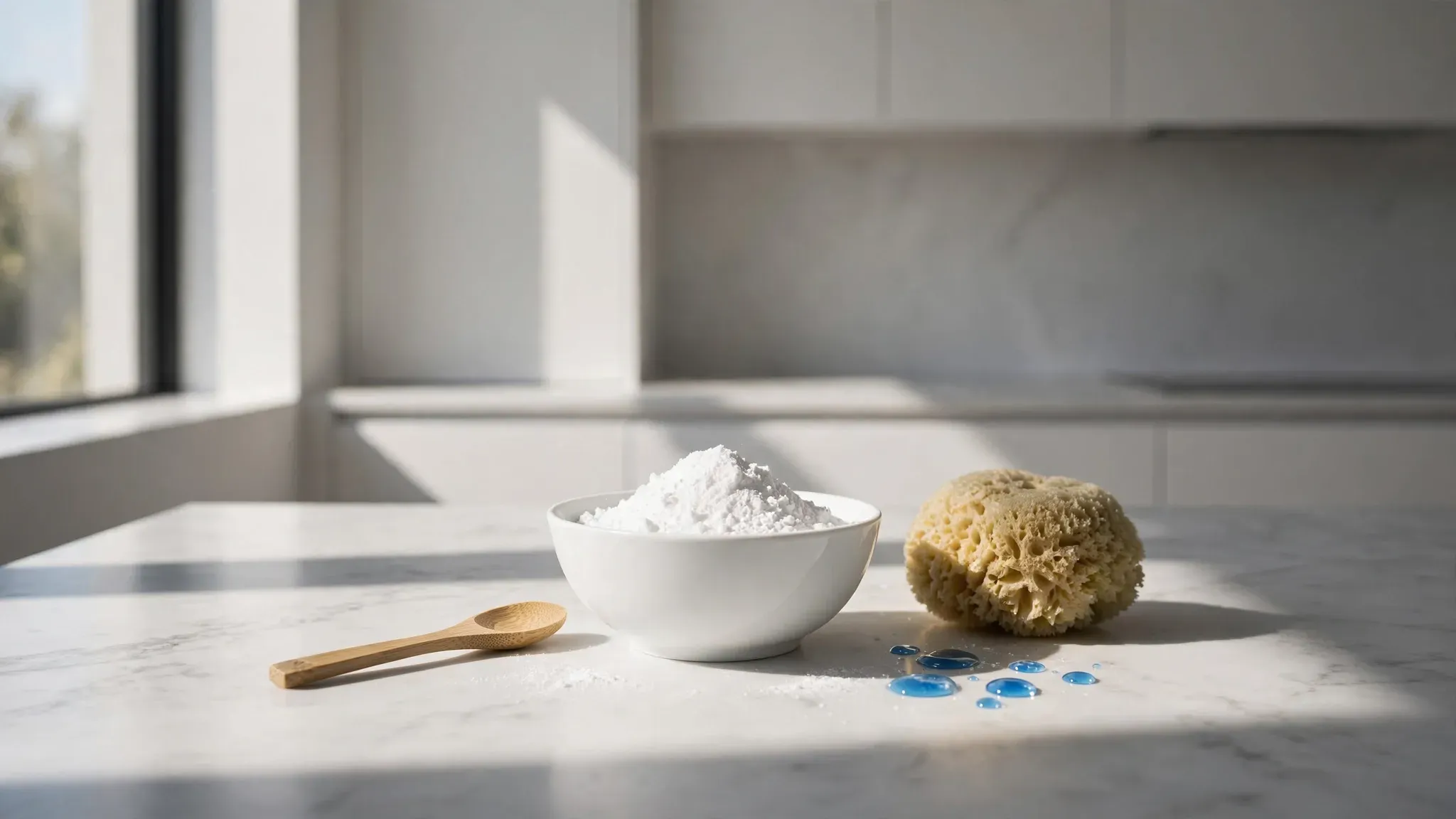
The hot water removed the loose surface oils perfectly. Now you face the sticky brown stains baked onto the dark metal. These stains happen when marinades burn during a long cooking cycle. You need a mild abrasive to lift these stubborn brown spots. Grab your box of baking soda and a small clean bowl. Pour three tablespoons of baking soda powder into the small bowl. Squeeze one tablespoon of liquid dish soap directly over the white powder. Mix them together until a thick, gritty paste forms perfectly. The paste should feel like heavy toothpaste in your bare hands. I prefer mixing it with my fingers to check the exact texture. If it feels too runny, pour in a bit more baking soda. If it feels too dry, squeeze in a little more liquid soap.
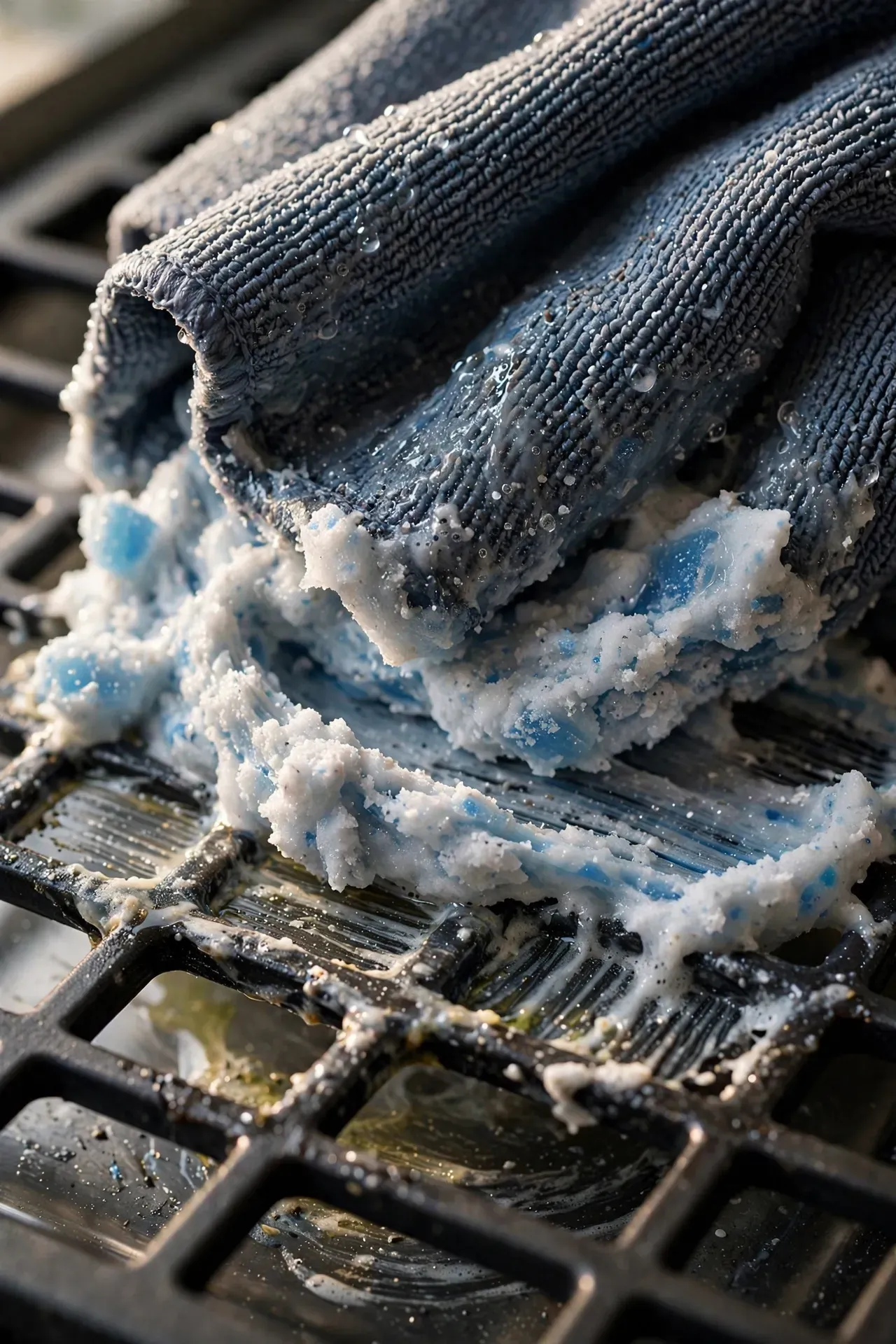
Scoop this paste directly onto a damp blue microfiber cloth. Spread it generously over the worst brown stains inside your basket. The soap cuts the fat while the powder scrubs the metal surface. This combination lifts burnt sugars without scratching the protective factory finish. I coat the entire bottom grate in this thick white layer. Pay special attention to the corners where crumbs always gather rapidly. I used to ignore the corners completely when doing my dishes. Then I smelled burning crumbs every time I cooked frozen fries. Old food hides in the tiny gaps along the bottom plastic edge. Press your paste-covered cloth firmly into these tight ninety-degree angles. A cheap paste replaces twenty-dollar bottles of harsh kitchen chemical sprays entirely. You avoid spraying toxic chemical fumes into the air you breathe daily.
4. Let the Mixture Sit for Two Minutes
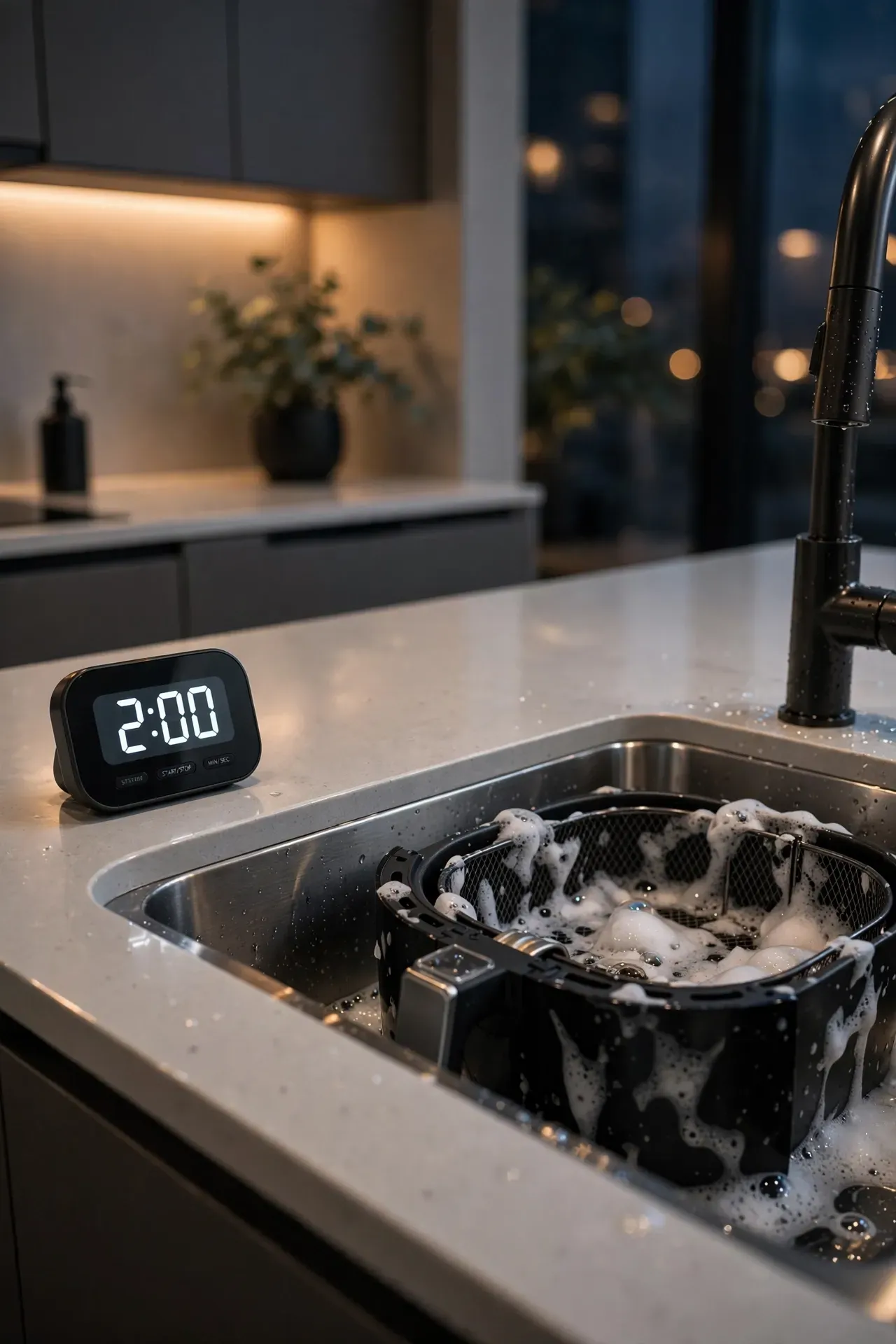
Time is your best friend when fighting dirty kitchen appliances. Set your timer for exactly one hundred and twenty seconds flat. Walk away from the sink and let the gritty paste work slowly. This waiting period allows the chemistry to happen naturally without effort. The baking soda penetrates the microscopic pores of the baked-on grease. The dish soap surrounds the fat molecules to lift them straight up. I usually wipe down my kitchen counters during this very brief wait. Standing and staring at a dirty basket wastes your free evening. I started to multitask during these tiny pockets of spare time.
Two minutes gives the paste the perfect window to act. If you wait too long, the paste dries out completely and hardens. Dry baking soda becomes a hard cement that requires more heavy scraping. If you scrub too early, you end up doing manual physical labor. I timed this step perfectly after dozens of frustrating evening cleanings. At exactly two minutes, the paste reaches maximum grease-lifting power. The brown stains begin to bleed into the white soapy mixture visibly. You will see the paste turn a dirty yellow color right away. This color change proves the chemical reaction is actually happening fast. You can physically see the grime transferring out of the pan. Stick to the two-minute rule for the fastest possible finish.
5. Wipe Away the Loosened Grime
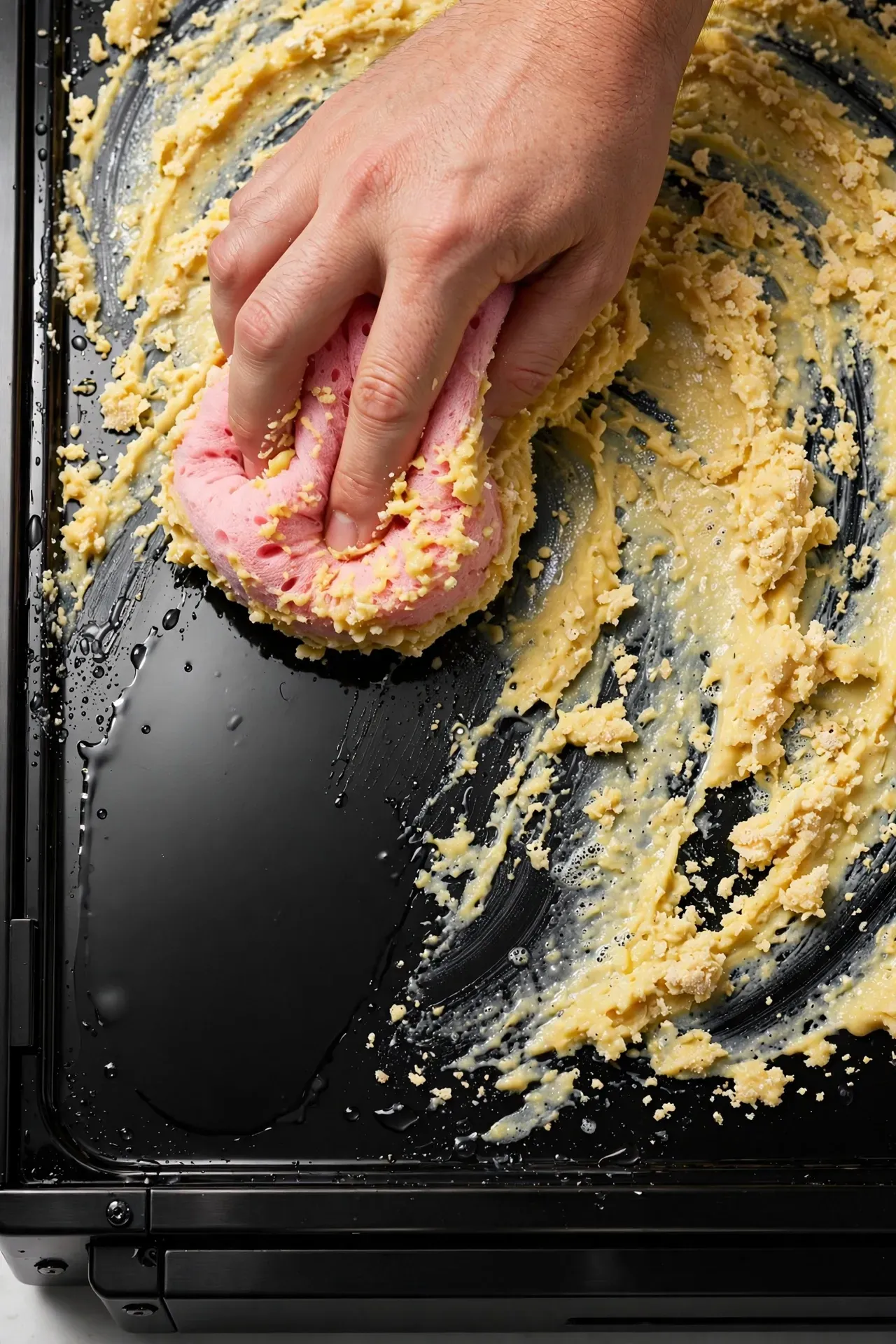
The timer sounds and the waiting is completely done. Grab your non-scratch nylon sponge and wet it with warm water. Squeeze out the excess water so it stays damp, not dripping wet. Gently press the soft sponge into the bottom of the dirty basket. You do not need to use heavy physical pressure here at all. Move the sponge in small, overlapping circles across the metal grates. The gritty paste will slide around and take the grease with it. You will feel the surface get much smoother under your moving hand. The sticky resistance of the grease completely disappears as you wipe.
I always start in the center and work my way outward slowly. Push the dirty yellow paste toward the outer edges of the pan. The brown carbon spots will simply wipe away like wet brown mud. I vividly remember scrubbing until my shoulders ached badly last year. My old way involved brutal physical force and ruined many expensive sponges. This new routine requires the exact same pressure you use wiping a table. The baking soda acts as millions of tiny, gentle scrubbing hands. Pay close attention to the small ventilation holes cut in the tray. Grease loves to hide inside these tiny cutouts and bake super hard. Push the corner of your sponge into these small holes very gently. Rotate the sponge quickly to clear out the trapped food particles. The entire wiping sequence takes less than forty-five seconds to finish. You have successfully detached all the food from the metal surface.
6. Rinse Thoroughly Under Warm Water
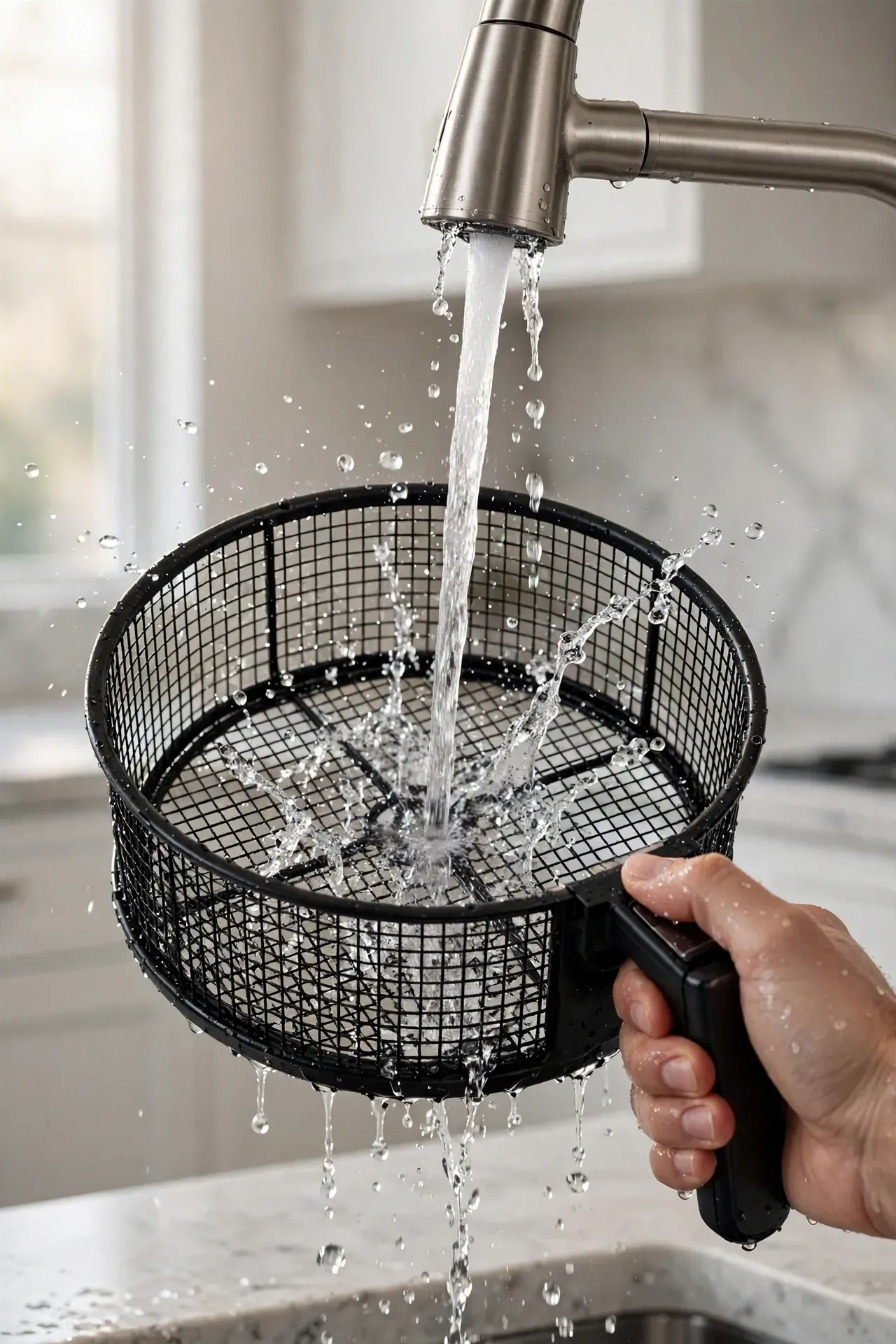
You must remove every single trace of the white cleaning paste. Turn your faucet on and select a warm water temperature setting. Cold water will shock the hot metal and leave a soapy film. Hold the basket directly under the running water stream carefully. Use your clean fingers to rub the metal surface gently underwater. You want to feel the smooth texture of the bottom black grate. It should feel perfectly smooth and squeaky clean to the touch. Any greasy spots will feel distinctly slimy under your bare fingers. If you feel a slimy spot, rub it gently with your thumb.
The warm water flushes the baking soda out of the tiny holes. Tilt the basket side to side to catch every single angle. The water running out of the bottom should look perfectly clear. Leaving dried baking soda behind ruins your next meal completely. I cooked chicken wings after a sloppy rinse job last month. The chicken tasted like bitter soap and chalky white powder. We had to throw the entire expensive dinner in the trash can. Take an extra twenty seconds to rinse the metal perfectly clean. Look closely at the edges where the metal meets the plastic shell. White residue loves to hide in these tight overlapping structural joints. Spray water directly into these crevices to flush them out completely. Shake the basket firmly over the sink to remove trapped water drops. Listen for the sound of water sloshing inside the plastic handle joint. Keep shaking until the annoying dripping stops entirely.
7. Dry Completely Before the Next Meal
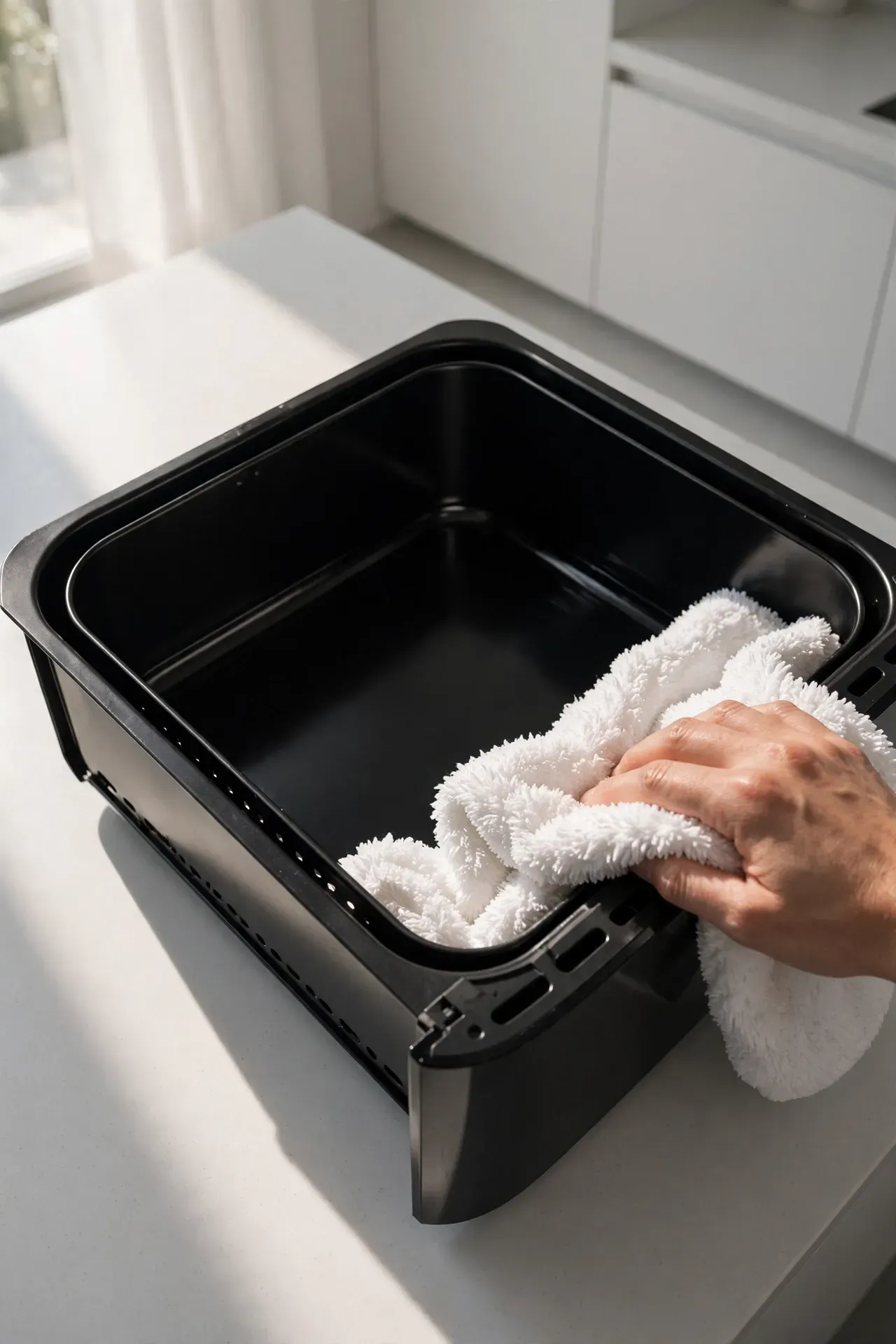
Water is the silent enemy of your expensive kitchen cooking appliances. Leaving the basket wet causes long-term rust damage to the metal components. The steel screws and hidden springs inside the handle will eventually rust. Rust compromises the safety and daily function of the entire cooking unit. You must dry the hardware immediately after the final hot water rinse. Grab a clean, dry microfiber cloth or a thick paper towel. Wipe the entire inside surface until absolutely no moisture remains visible. Press the dry towel into the corners to absorb hiding water drops. Flip the basket over and dry the external plastic shell too. The outside gets just as much flying food splatter as the inside.
Air drying sounds easier, but it leaves ugly hard water stains. I let my basket air dry on a metal rack one night. The next morning, it looked covered in dusty white circles. Tap water contains heavy minerals that stay behind when water evaporates. A quick towel dry prevents these ugly white spots from forming. After towel drying, I slide the empty basket back into the machine. I turn the machine on at 400 degrees for exactly three minutes. This blasts hot air directly through the internal cooking chamber. The extreme heat evaporates any moisture trapped deep inside the handle mechanism. This tiny extra step keeps my machine smelling fresh and incredibly clean.
Mistakes That Make Cleaning Harder
Many people create their own worst kitchen nightmares completely by accident. Leaving the dirty basket sitting on the stove overnight causes massive headaches. The hot grease slowly cools down into a solid, sticky glue. This glue hardens further as the cold night air hits it. I left a greasy pan out after a long Friday night party. Saturday morning required twenty minutes of aggressive heavy scraping to fix it. Always fill the dirty pan with hot soapy water immediately after serving. You can eat your hot dinner while the soaking does the hard work.
Overcrowding the basket forces meat juices to boil instead of roast dry. When you pile chicken wings on top of each other, they steam. The wet steam carries grease particles directly up into the heating element. These particles bake onto the ceiling and rain down during the next cook. Keep your food in a single flat layer with space between pieces. This guarantees perfectly crispy food and keeps the grease safely at the bottom. Small behavior changes in how you cook drastically change how you wash.
Start protecting your appliance with these simple daily habits:
Soak the basket immediately after plating your hot food
Lower cooking temperatures for high-fat meats like bacon
Leave empty space between pieces of food for airflow
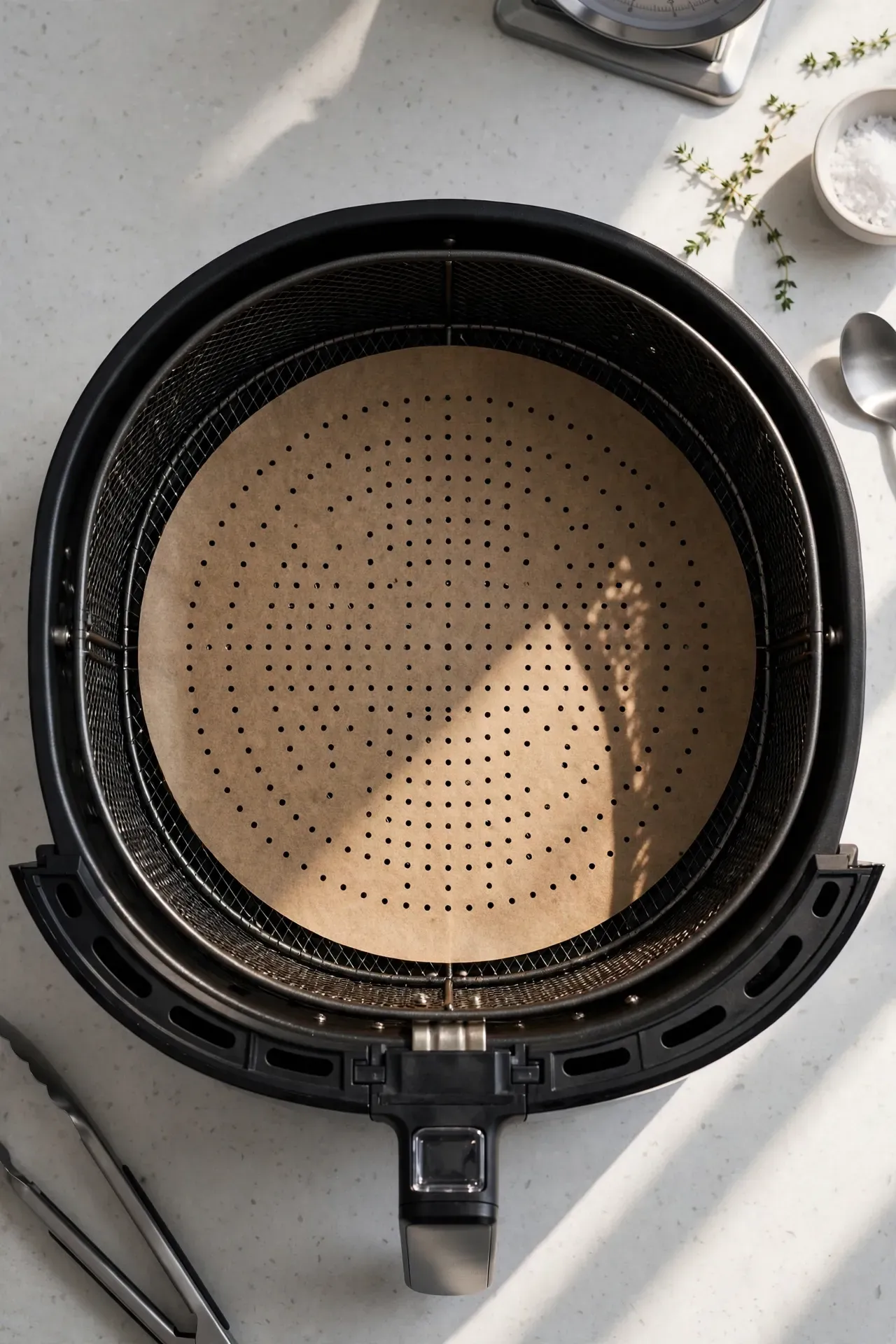
Use perforated paper liners for sticky barbecue marinades
Tools That Ruin Non-Stick Coatings
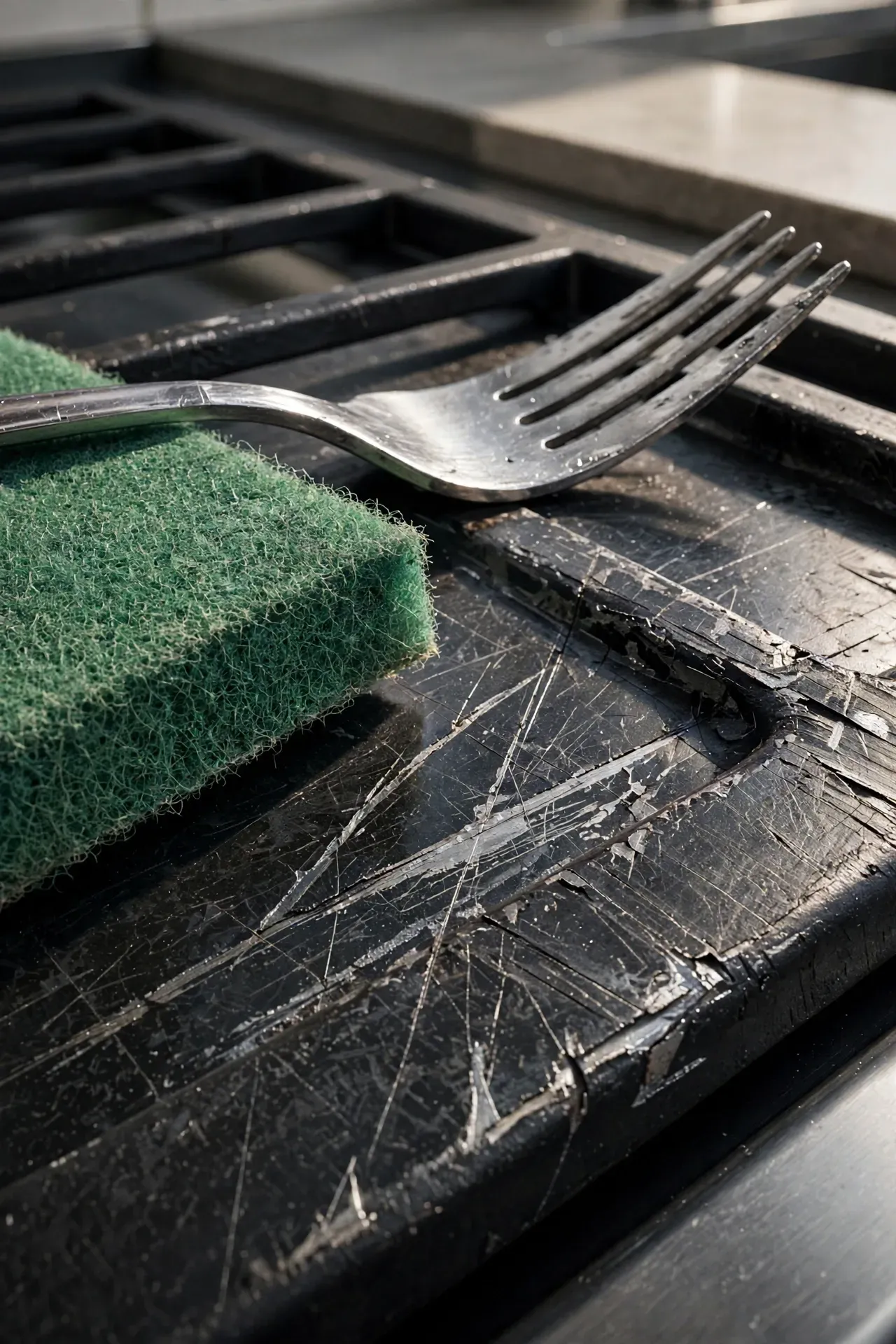
Your appliance relies on a very thin layer of Teflon or ceramic. This coating stops food from permanently bonding to the metal grate. You must protect this layer at all costs during daily washing. A ruined coating means you will fight sticky food forever. Never let metal utensils touch the inside of your cooking basket. Metal forks and heavy spoons will scratch the bottom instantly. I watched a roommate use a metal fork to flip hot sausages. The fork left deep silver scratches across the black floor. Food started sticking to those exact scratches the very next day. Always use silicone or soft wooden tongs to handle your hot food.
Your choice of cleaning sponge also matters more than you think. The grocery store sells sponges with heavy-duty green scouring pads attached. These green pads contain harsh abrasive minerals meant for bare cast iron. Using a green pad on a non-stick surface works exactly like sandpaper. It aggressively strips the dark coating right off the metal base. Stick to blue or pink sponges labeled specifically for delicate surfaces.
You must avoid these common items entirely:
Steel wool wire scrubbing pads
Metal forks, knives, and spatulas
Abrasive green commercial dish sponges
Chemical oven cleaning sprays
Frequently Asked Questions
Can I put the basket in the dishwasher?
The dishwasher seems like the easiest way to handle dirty dishes. Most instruction manuals clearly state the parts are totally dishwasher safe. I strongly advise against putting the basket in your machine. Dishwasher detergent relies on harsh enzymes and extreme water pressure. These aggressive chemicals slowly eat away the non-stick protective layer entirely. I ran my drawer through the dishwasher twice a week initially. The coating started bubbling and peeling off after three short months. Hand washing takes five minutes and extends the lifespan by years.
What cuts through old baked-on grease?
Sometimes you inherit a machine that has never been washed properly. The grease turns into a hard, sticky varnish resembling black glass. Regular liquid dish soap will not dent this hardened layer of carbon. You need to create a thicker paste of baking soda and water. Smear this thick paste over the black stains and walk away. Leave the paste sitting on the counter for a full hour. The prolonged exposure breaks down the chemical bonds of the varnish. You might need to repeat this heavy soak twice for extreme cases.
Is baking soda safe for non-stick surfaces?
Baking soda behaves as a very mild, non-destructive abrasive powder. The fine particles are tough enough to break apart burnt food residue. The particles are too soft to scratch Teflon or ceramic coatings. I use baking soda on all my expensive non-stick frying pans. You must mix it with water or soap to create a wet paste. Rubbing dry baking soda very hard might cause tiny micro-scratches. Always keep the mixture wet and use gentle, circular wiping motions.
Why does my air fryer smell like old food?
A lingering smell means trapped grease hides somewhere inside the unit. Food splatter goes far beyond the bottom cooking drawer. Turn your unplugged machine upside down and look at the heating coil. You will likely see brown grease spots covering the metal ceiling. Wipe this upper area gently with a damp, soapy cloth. The smell happens when this hidden grease burns again and again. I wipe the ceiling coil once a month to stop bad smells.
Final Thoughts on Appliance Care
You now possess the exact routine to handle daily kitchen messes. Spending five minutes on cleaning saves your expensive cooking equipment. You never have to fear cooking messy foods like bacon again. The combination of hot water, basic soap, and baking soda works perfectly. You skip the harsh smells of industrial oven cleaning sprays. Your food will taste fresh because the old grease is entirely gone. A clean machine cooks food faster and crisps edges much better. The hot air bounces off clean walls instead of sticky grime. Keep your baking soda and soft sponge right next to the sink. You will easily start this fast habit into your evening routine. Your kitchen deserves this simple, fast, and highly reliable treatment.

Anna Moretti — Editor-in-Chief & Founder
Anna Moretti is a Le Cordon Bleu graduate whose seven years in Michelin-starred kitchens across Paris and London, including stages at L’Arpège and The Ledbury, shape every recipe she touches. Her work has appeared in Bon Appétit, Saveur, and The Kitchn. As Editor-in-Chief, Anna develops each signature recipe herself and tests it three times before publication, guided by a simple belief: if a recipe doesn’t work in a tired home cook’s kitchen at the end of a long Tuesday, it isn’t ready. She reviews every piece of content for accuracy, voice, and the small details that turn a good recipe into a great one.