6 Sheet Pan Mistakes That Wreck Your Dinner
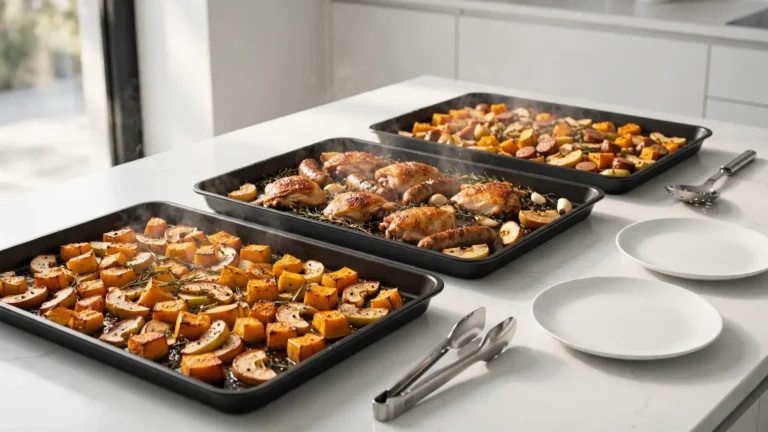
Cooking your entire meal on one single baking tray sounds like a foolproof plan. You simply chop your fresh ingredients, toss them onto the metal, and wait. Unfortunately, dinner often comes out completely ruined after an hour. The chicken turns rubbery, and the dense potatoes stay raw inside. The vegetables taste like mush instead of getting crunchy edges. You made extremely common cooking mistakes that happen to everyone. We fix these nightly kitchen disasters right now.
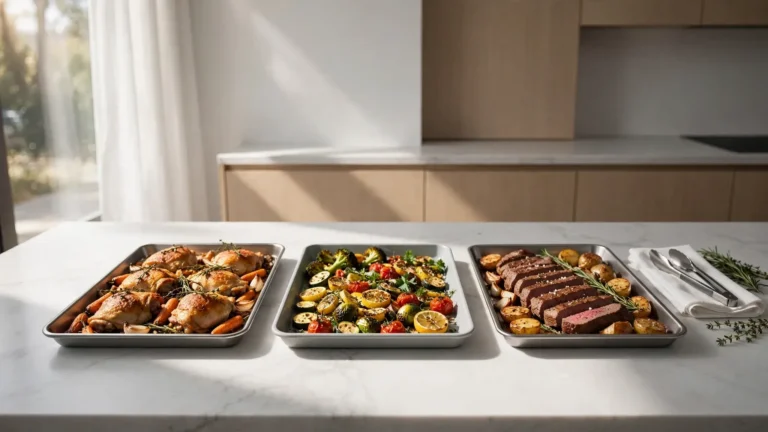
You will fix these dinner disasters tonight by changing just a few small habits. I outline six specific meals showing exactly what goes wrong at home. You will stop overcrowding the metal tray immediately. You will master heat control for every single ingredient. You will time your meat and vegetables perfectly. Your meals will come out crispy and tender every single time. You get perfectly golden edges on your vegetables. You stop eating mushy, steamed food forever. You avoid smoking up your home with burnt kitchen grease.
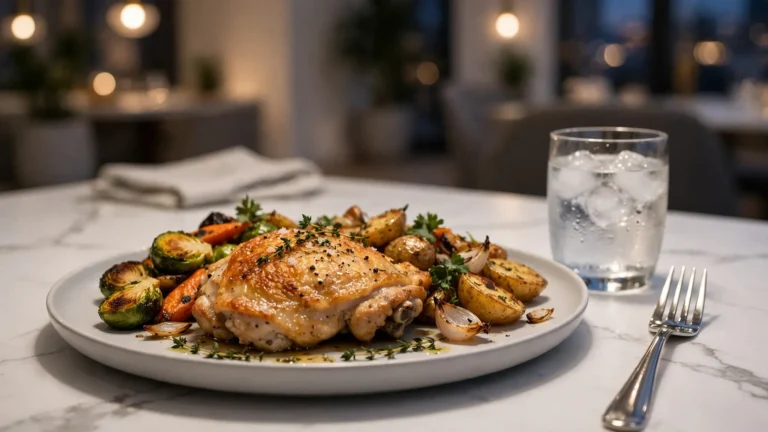
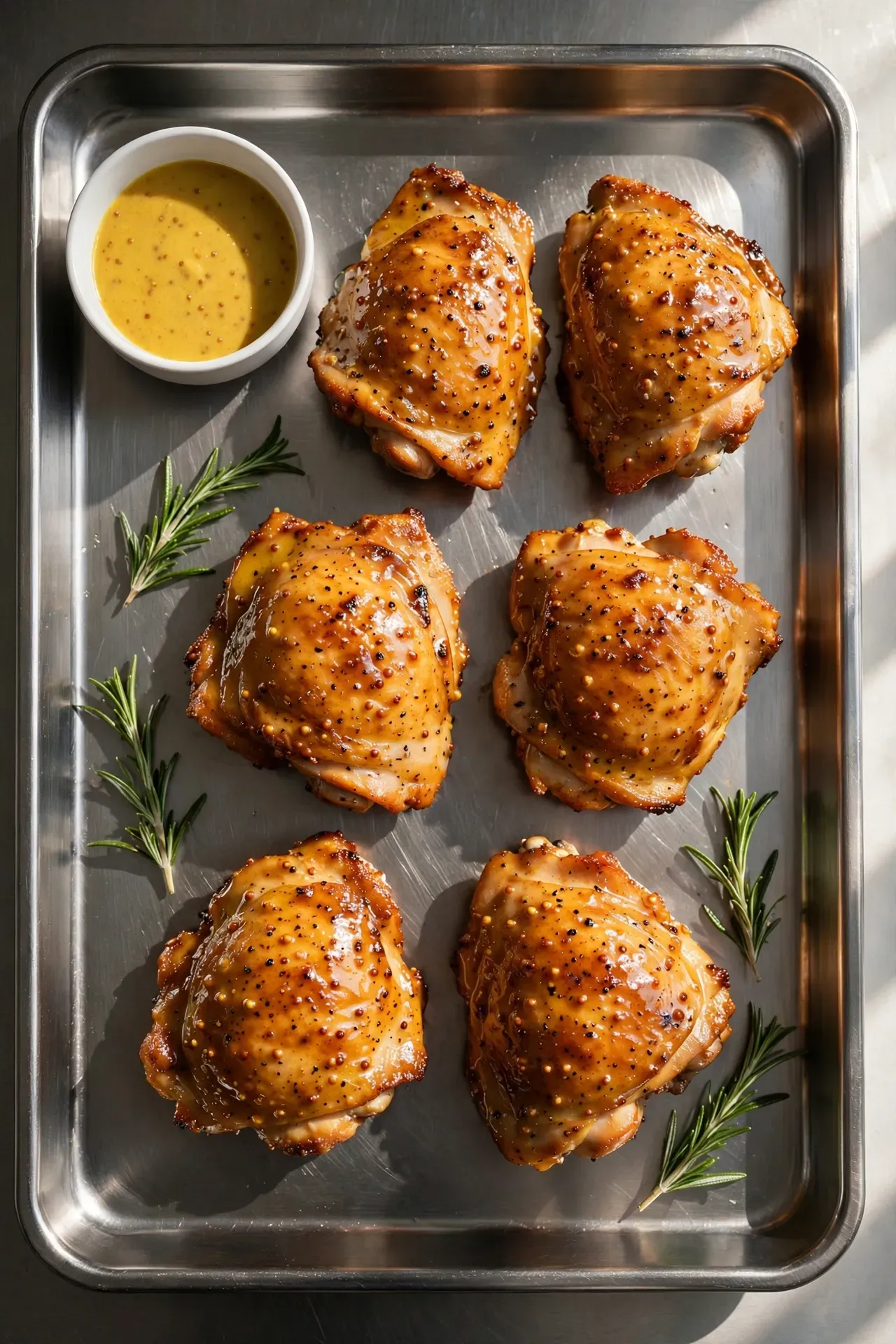
Honey Mustard Chicken Thighs
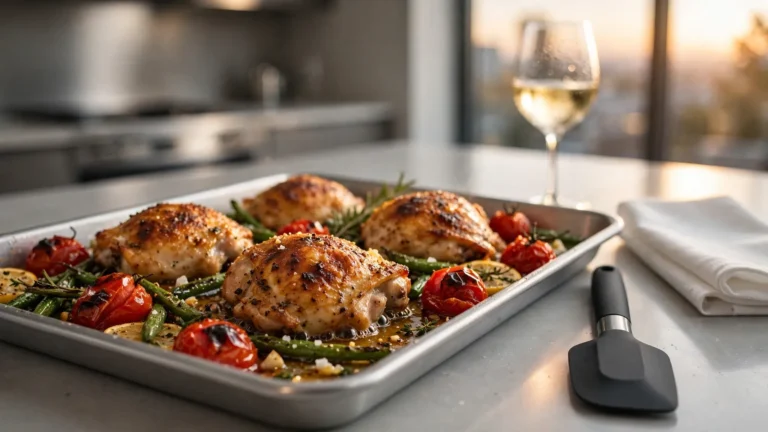
This sticky, savory dish is a weekly favorite for busy families. Sweet honey meets sharp mustard for an incredibly bold flavor profile. The meat turns wonderfully tender inside while the outside gets perfectly glossy. But hungry home cooks constantly pack the metal tray too tightly. The trapped moisture causes the meat to steam instead of roasting properly. You end up eating gray, rubbery skin. Give your ingredients plenty of empty space to breathe.
Ingredients
Instructions
-
01
Preheat your oven to 400 degrees Fahrenheit.
-
02
Whisk the mustard, honey, and olive oil in a small bowl.
-
03
Pat the meat completely dry with a paper towel.
-
04
Coat the meat thoroughly with the sticky glaze.
-
05
Place pieces on the metal with two inches between them.
-
06
Bake for 35 minutes until the skin turns crispy.
-
07
Let the meat rest for five minutes before serving.
-
08
The Overcrowding Mistake
-
09
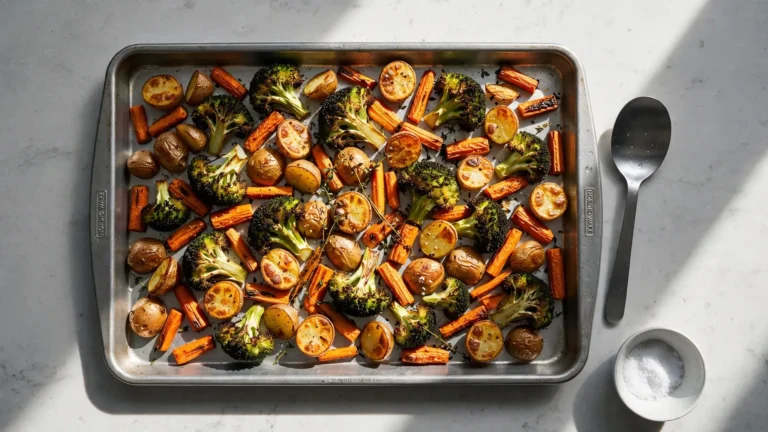
People pile food onto a single tray constantly to save washing dishes. This traps water beneath the food instantly. The trapped water turns into hot steam inside the oven. The steam cooks the meat gently instead of searing it. You completely lose the beautiful golden browning that creates flavor. The food tastes soggy and incredibly flat. Leave two full inches of empty space between every item. Grab a second tray if you run out of room. Two trays fix this entire disaster instantly.
-
10
Substitutions And Swaps
-
11
You can use boneless meat easily for this meal. The boneless cuts cook about ten minutes faster. You can swap maple syrup for the raw honey. The flavor remains deeply sweet and intensely rich. Use dairy-free butter instead of oil for a richer taste profile.
-
12
Make-Ahead And Storage
-
13
You can whisk the marinade three days early. Keep it in a tightly sealed glass jar in the fridge. You can coat the raw meat in the morning before work. Let it sit in the cold fridge all day long. The mustard flavor penetrates deeply into the meat over hours.
In my experience, wiping the skin completely dry makes a massive difference. Wet meat steams instead of browning under the heat.
Garlic Butter Salmon
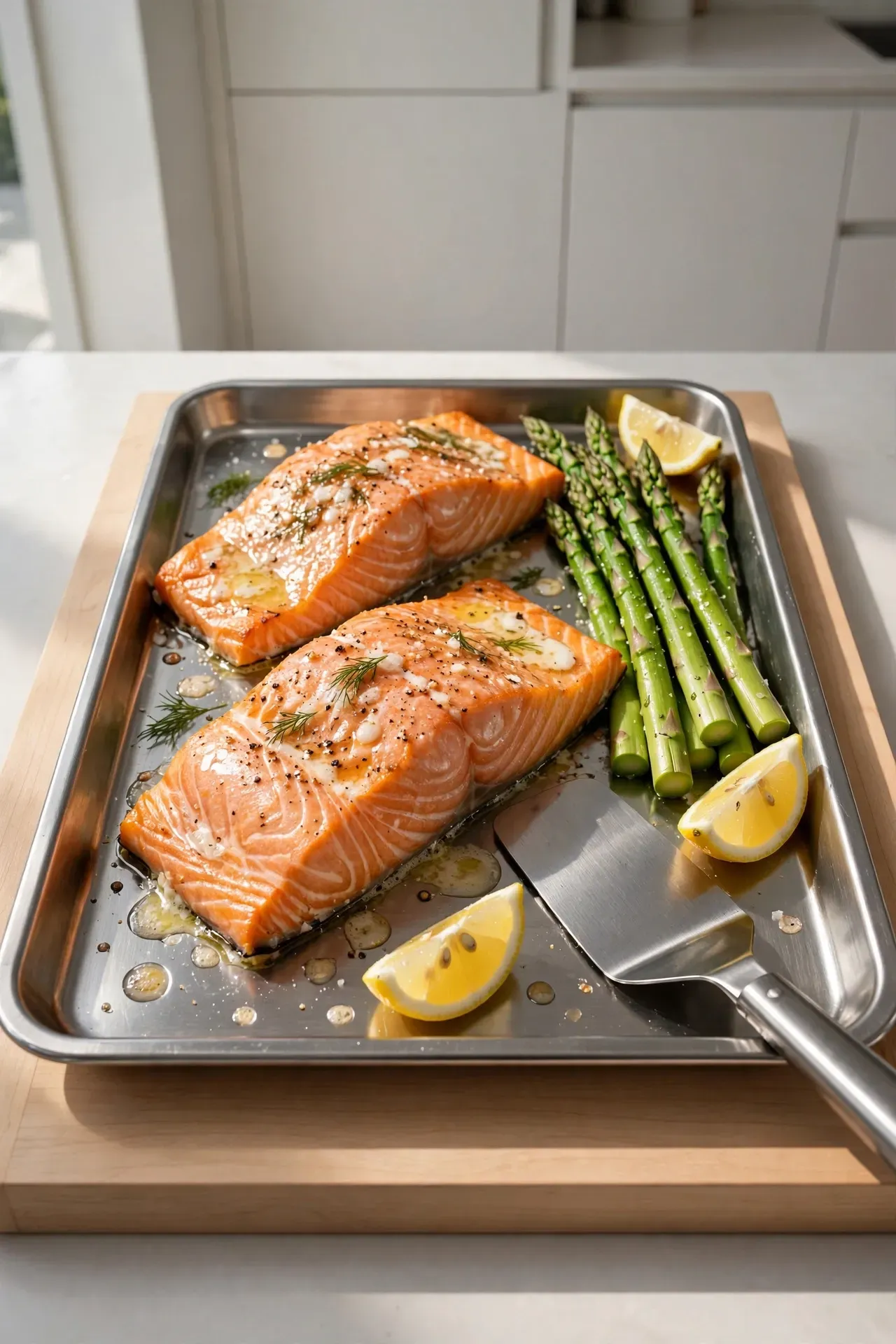
This rich, flaky fish pairs perfectly with tender green stalks. Garlic butter melts beautifully over the warm, colorful ingredients. The smell of roasted garlic fills the entire kitchen quickly. But fish cooks much faster than dense root vegetables. Putting everything inside the oven together ruins the entire meal. You get dry fish or raw, hard potatoes. Stagger your timing perfectly based on density.
Ingredients
Instructions
-
01
Preheat the oven to 425 degrees Fahrenheit.
-
02
Toss the potatoes with butter and garlic.
-
03
Spread potatoes evenly across the tray.
-
04
Roast the potatoes alone for 20 minutes.
-
05
Push potatoes to the sides of the metal.
-
06
Place the fish and green stalks in the center.
-
07
Bake for 12 more minutes until the fish flakes.
-
08
The Timing Mistake
-
09
A hard potato takes forty minutes to soften completely inside. A delicate fish takes barely twelve minutes to cook perfectly. You cannot put them into the heat at the same exact moment. The fish will turn into dry sawdust quickly. The hard potatoes will break your teeth. You must stage your ingredients based on their natural density. Root vegetables go in first every single time. Soft vegetables and seafood go in at the very end.
-
10
Ingredient Spotlight
-
11
Farm-raised fish contains excess water and artificial coloring. Wild fish cooks much cleaner on a hot metal surface. The natural fats render beautifully under high temperatures. The skin gets remarkably crispy against the bare metal. Buy frozen wild fillets for a cheaper, highly reliable alternative.
-
12
Dietary Adaptation Guide
-
13
Make this dairy-free very easily for sensitive guests. Swap the heavy butter for high-quality avocado oil. The garlic infuses into the oil just as nicely. You get a perfectly crisp edge without using dairy products. This meal fits perfectly into a whole thirty diet plan.
Spicy Sausage And Peppers
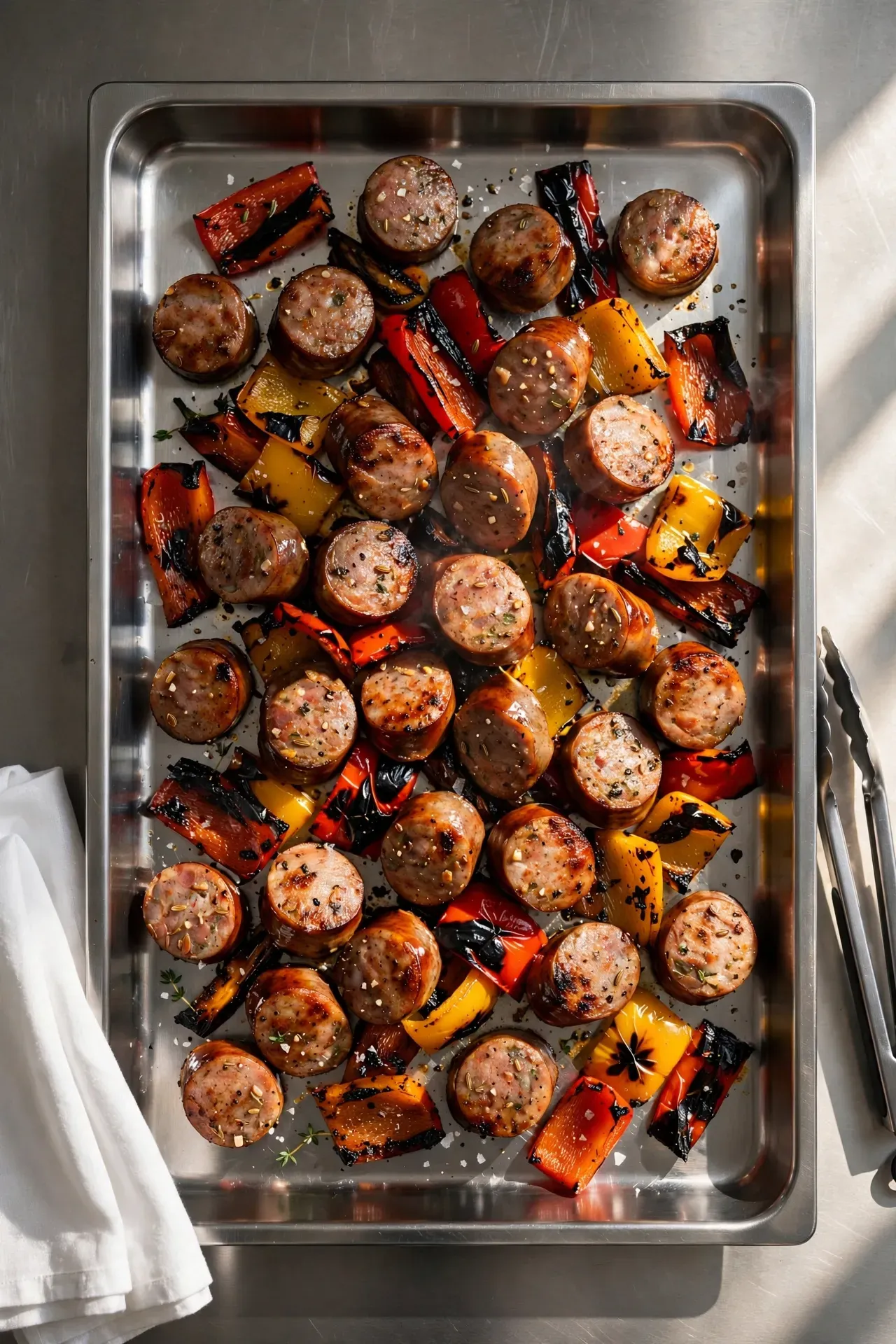
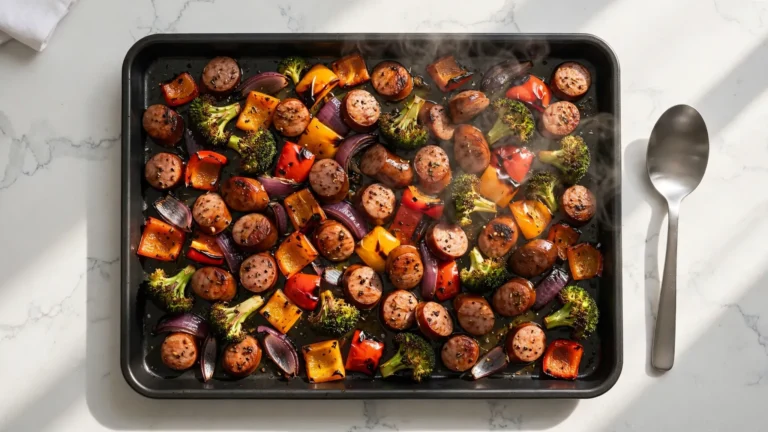
This smoky, colorful dish feels like a warm Italian kitchen. Sweet bell peppers soften beautifully under intense heat. Thick sausage slices release rich, savory juices across the metal. It makes a perfect comfort meal for cold winter nights. But cold trays make the meat stick terribly to the surface. The casing tears off completely when you flip it. Preheating the bare metal creates an instant, beautiful sear.
Ingredients
Instructions
-
01
Place your empty metal tray into the cold oven.
-
02
Set the oven temperature to 400 degrees Fahrenheit.
-
03
Toss the peppers and onions with the oil.
-
04
Slice the sausages into thick, even rounds.
-
05
Remove the screaming hot tray very carefully.
-
06
Dump the coated ingredients onto the hot metal.
-
07
Bake for 25 minutes until the edges turn black.
-
08
The Cold Metal Mistake
-
09
Putting cold meat onto cold metal guarantees severe sticking. The proteins bond directly to the microscopic pores in the metal pan. The food tears apart violently when you try flipping it. Heating the bare metal first creates a slick non-stick surface naturally. The hot metal sears the meat upon immediate contact. You lock the delicious juices inside the food instantly. You hear a loud sizzle the second the food drops.
-
10
Tool Assessment
-
11
I test baking tools constantly in my own home kitchen. The Great Jones Holy Sheet pan performs exceptionally well here. The bright colors look beautiful leaning against the wall. The real magic lies in the heavy aluminized steel core. It holds insane amounts of heat safely and consistently. The pan never buckles under high temperatures.
-
12
Make-Ahead And Storage
-
13
You can slice the vegetables five days early without issues. Store them in airtight glass containers in the fridge. Cut the sausages on the exact day you cook them. The delicate casing dries out if you cut it too early. Keep the leftovers for amazing desk lunches. The flavors meld together beautifully overnight in the fridge.
Crispy Parmesan Asparagus
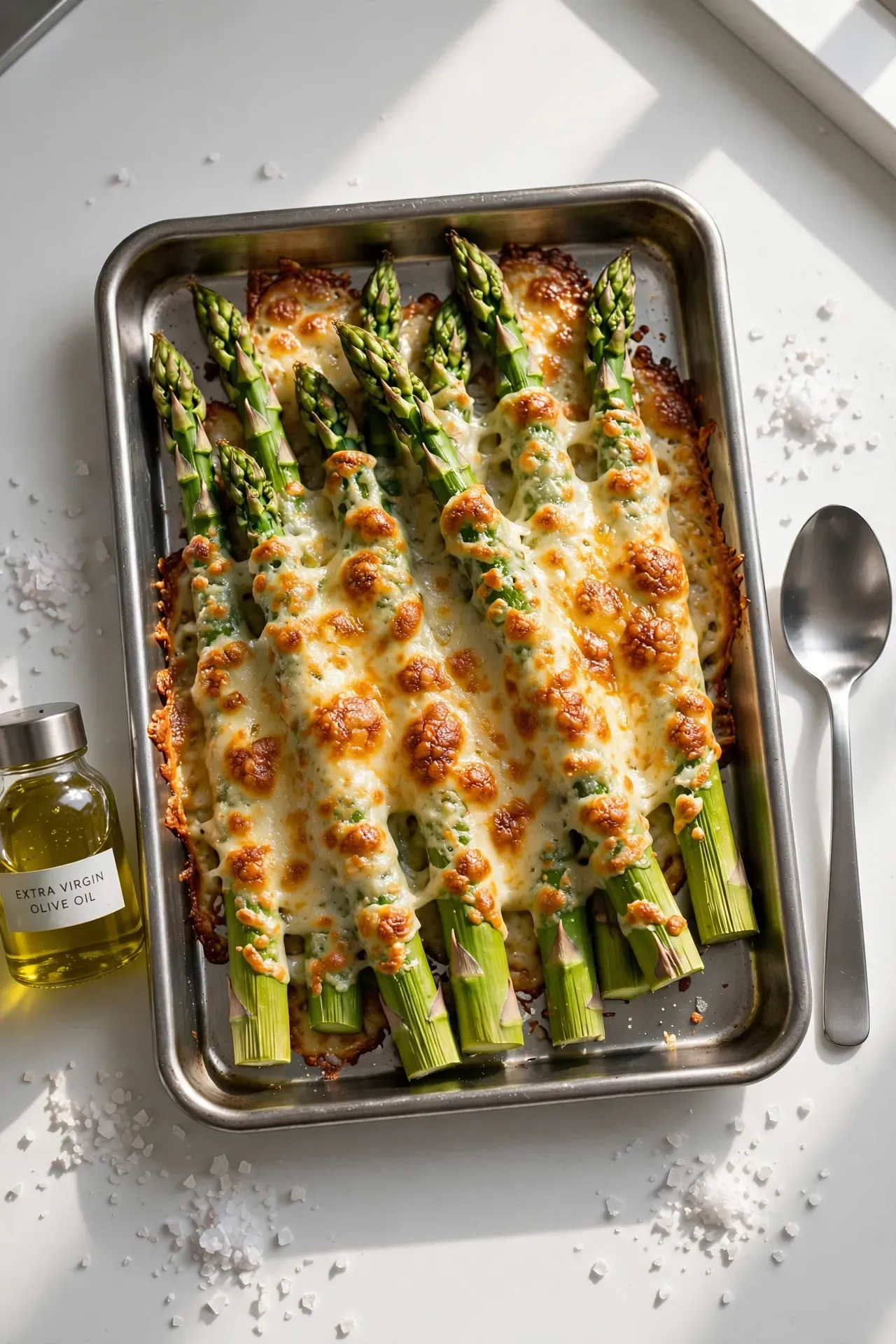
This bright, earthy side dish steals the show at dinnertime. Salty cheese melts deeply into the tender green stalks. The fine tips turn dark and incredibly crunchy in the oven. People constantly try cutting calories by skipping oil entirely. The stalks simply shrivel up into dry, chewy strings. Fat conducts heat perfectly across the uneven surfaces. You absolutely need fat for that perfect golden crust.
Ingredients
Instructions
-
01
Preheat the oven to 425 degrees Fahrenheit.
-
02
Snap the woody ends off the green stalks.
-
03
Drizzle the oil heavily over the vegetables.
-
04
Massage the oil onto every single stalk firmly.
-
05
Arrange them in a single flat layer.
-
06
Sprinkle the cheese heavily over the top.
-
07
Roast for 12 minutes until the cheese bubbles.
-
08
The Dry Roasting Mistake
-
09
Dry air inside an oven dehydrates vegetables extremely rapidly. They shrivel into sad, chewy strings without a barrier. Oil acts as a thermal blanket around the delicate food. The fat catches the heat and fries the exterior evenly. The food cooks much faster and stays moist inside. Never skip the fat when making roasted vegetables. Olive oil provides deep flavor and creates the perfect crunch.
-
10
Ingredient Spotlight
-
11
I strictly use Lucini extra virgin olive oil for roasting vegetables. Cheap oils smoke far too early and taste incredibly rancid. This specific brand handles four hundred degrees perfectly. The peppery notes cut through the rich cheese beautifully. Pour it generously over the stalks before tossing.
-
12
Dietary Adaptation Guide
-
13
You can make this fully vegan very easily. Swap the dairy cheese for nutritional yeast flakes. The yellow yeast provides a remarkably similar savory flavor profile. Toss the stalks in the yeast before roasting them. The oil helps the flakes stick tightly to the vegetables.
Balsamic Glazed Steak Bites
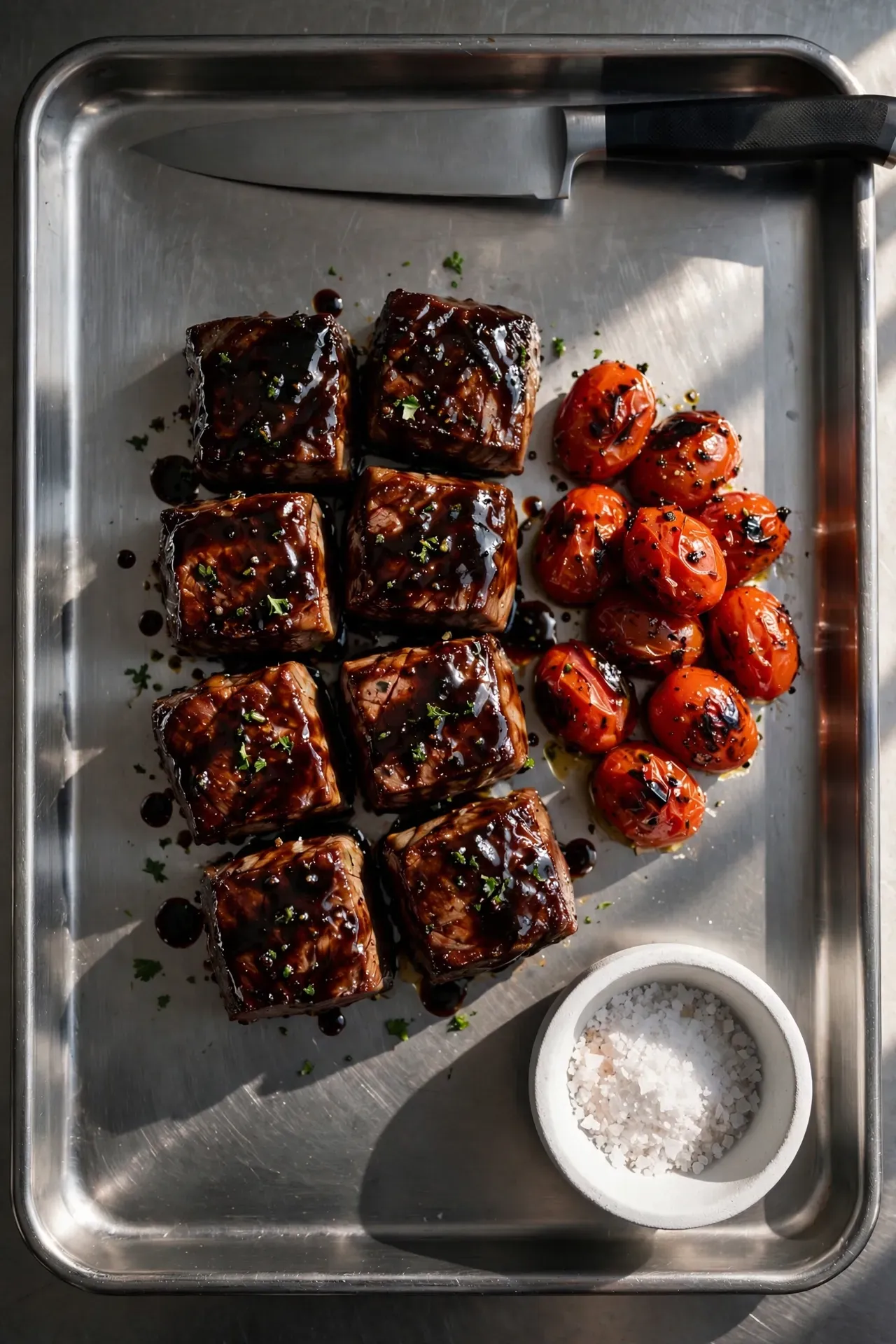
This deep, savory dish feels incredibly luxurious on a weeknight. Rich balsamic vinegar caramelizes beautifully onto tender chunks of beef. The meat melts perfectly in your mouth upon the first bite. But careless chopping ruins the whole tray entirely. Tiny pieces burn quickly into hard charcoal. Massive chunks stay completely raw in the middle. Consistency means everything when roasting mixed ingredients. Grab a sharp knife right away.
Ingredients
Instructions
-
01
Preheat the oven to 400 degrees Fahrenheit.
-
02
Cut the meat into exact one-inch cubes.
-
03
Toss the cubes with oil and spices.
-
04
Arrange the meat evenly on the tray.
-
05
Scatter the whole tomatoes between the meat.
-
06
Roast for 10 minutes for medium-rare centers.
-
07
Drizzle the thick dark glaze before serving.
-
08
I've noticed scoring the steak lightly lets the thick glaze penetrate deeper into the meat. The flavor explodes in your mouth.
-
09
The Uneven Chopping Mistake
-
10
Lazy chopping destroys expensive ingredients in a matter of minutes. An oven cooks everything at the exact same temperature simultaneously. Small items overcook and dry out extremely quickly. Large items stay cold and raw deep inside. You must equalize the cooking time manually at the cutting board. Cut everything into completely identical shapes and sizes. This guarantees uniform textures across the entire hot meal. Take five extra minutes at the wooden cutting board.
-
11
Tool Assessment
-
12
You cannot cut raw meat precisely with a dull blade. I rely on a heavy Wüsthof eight-inch chef's knife daily. The heavy weight of the German steel does all the physical work. It glides through raw steak effortlessly without tearing it. A sharp edge prevents the expensive meat from shredding. I sharpen mine deeply every single Sunday evening.
-
13
Substitutions And Swaps
-
14
You can use poultry breasts if beef costs far too much. Poultry requires fifteen minutes of cooking time instead of ten. Swap the bright tomatoes for chopped zucchini pieces anytime. The green zucchini absorbs the dark vinegar glaze beautifully.
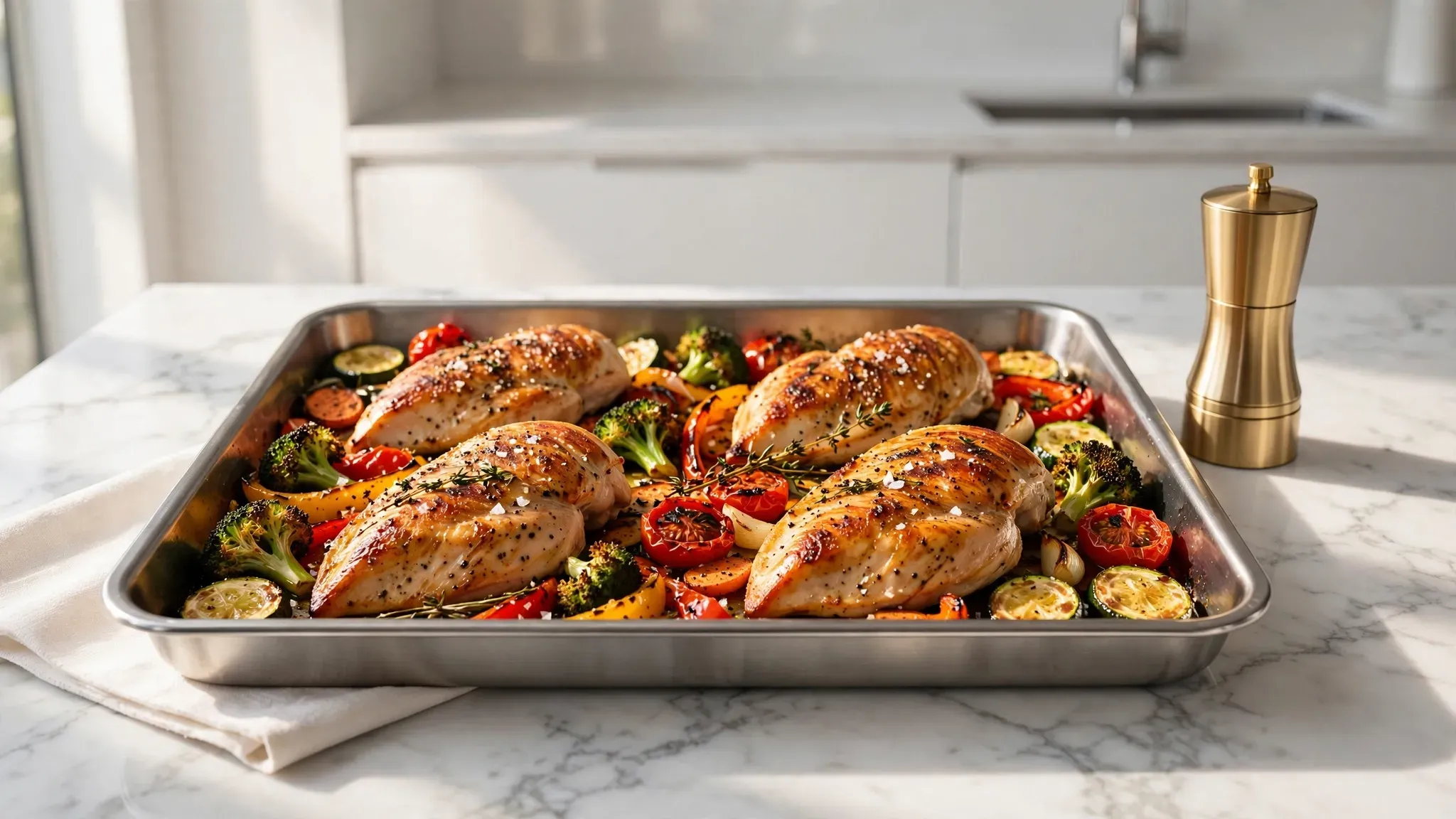
One-Pan Lemon Chicken
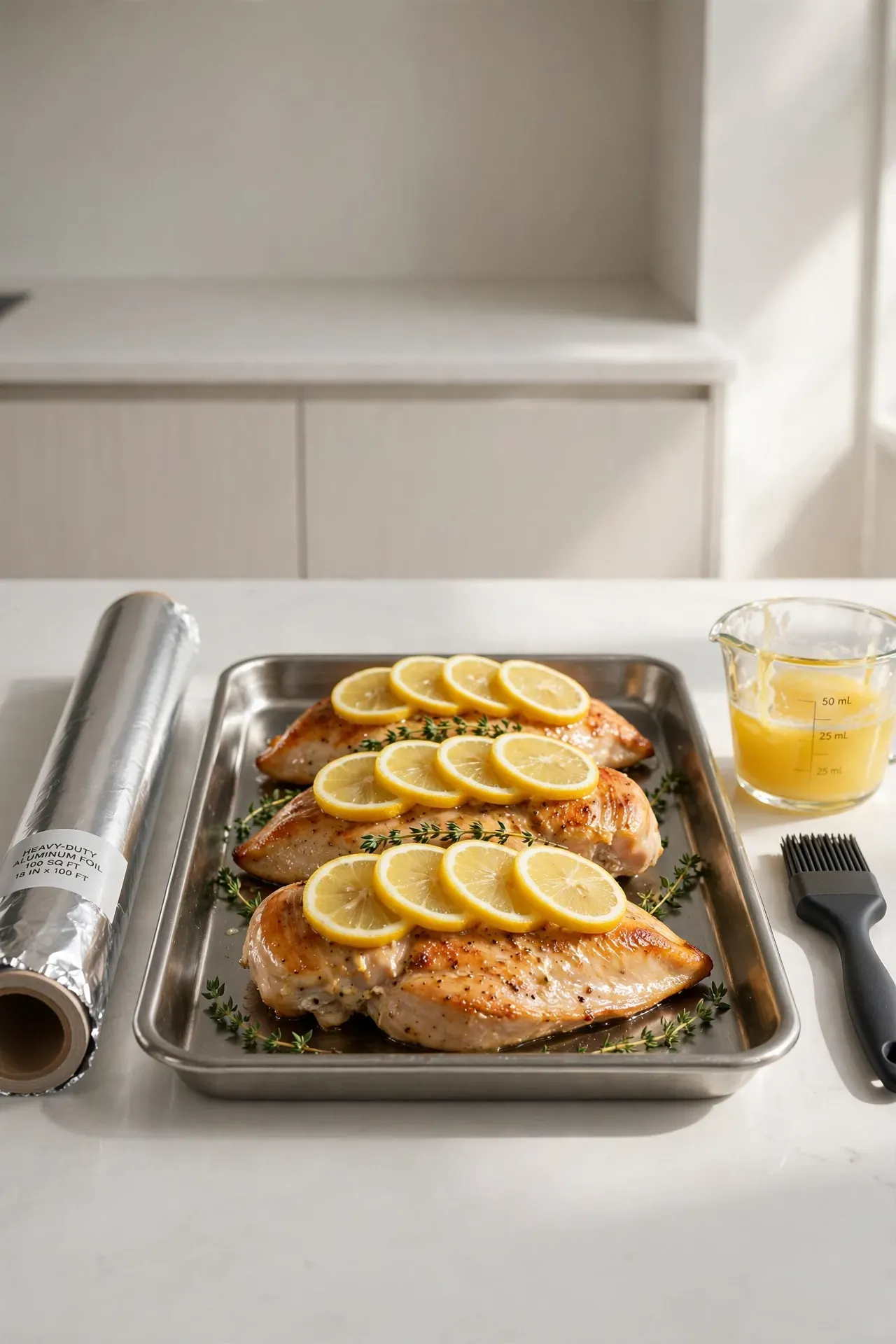
This bright, citrusy poultry smells like a warm summer evening. Fresh lemon slices roast perfectly alongside tender white meat. The pan drippings create a silky, incredibly rich sauce. But cheap, thin metal trays warp violently under high heat. The thin tray pops loudly inside the hot oven. All those delicious juices spill instantly over the edges. Invest money in heavy-gauge aluminum pans immediately.
Ingredients
Instructions
-
01
Preheat the oven to 375 degrees Fahrenheit.
-
02
Place the thick heavy-duty pan on the counter.
-
03
Lay the meat flat across the metal surface.
-
04
Brush the melted butter over the poultry.
-
05
Shingle the lemon slices heavily over the meat.
-
06
Sprinkle the fresh green thyme across the tray.
-
07
Bake for 25 minutes until juices run clear.
-
08
The Flimsy Bakeware Mistake
-
09
Thin baking sheets ruin clean kitchens very quickly. The thin metal cannot handle rapid temperature changes safely. The pan warps loudly in the oven with a massive pop. The hot juices run into the corner or spill completely. The spilled grease smokes terribly upon hitting the oven floor. The greasy smoke travels fast through the entire house. It coats absolutely everything in a sticky, horrible film.
-
10
Tool Assessment
-
11
I line my heavy pans with Reynolds Wrap foil consistently. The heavy-duty version never tears under a metal spatula. Standard foil rips easily and leaks grease everywhere. You save twenty minutes of hard scrubbing by choosing the right lining. Roll the foil edges upward to catch extra liquid perfectly.
-
12
Serving Suggestions
-
13
Slice the warm meat thickly directly across the grain. Pour the buttery lemon drippings straight over the warm slices. Serve this alongside a massive, crisp green salad. The cold crunch contrasts the warm, buttery poultry perfectly.
In my experience, a dusty frame or cloudy glass ruined the feel of my home last year. I noticed this issue with a gold frame in my Classy Bedroom last summer. The greasy air destroyed a beautiful piece in my hallway three years ago. The damp, smoky air travels incredibly fast. You must use thick pans to prevent this mess.
Frequently Asked Questions
Can I freeze these meals?
You can freeze roasted meats easily in glass containers. Vegetables get incredibly mushy after freezing and thawing them out. Make the meat on Sunday and freeze it completely. Make the vegetables fresh on the exact night you eat them.
What if I lack an ingredient?
Swap sweet potatoes for red potatoes anytime you want. Use avocado oil instead of olive oil for higher heat roasting. The oven timing stays exactly the same for both swaps.
Can I make these meals ahead of time?
You can chop absolutely everything on Sunday afternoon. Store the raw pieces in glass containers inside the fridge. Toss them onto the metal tray when you get home.
Do I use parchment paper or foil?
Foil reflects heat and cooks food much faster underneath. Parchment paper prevents sticking beautifully without reflecting extra heat. Avoid using either liner if you want a heavy, dark crust.
Why is my tray smoking so much?
You used cooking oil with a very low smoke point. Extra virgin olive oil burns terribly at high temperatures. Switch to avocado oil for roasting above 400 degrees Fahrenheit.
How do I clean a burnt tray?
Boil water and pour it over the black mess. Sprinkle baking soda heavily over the hot water. Let the metal sit undisturbed for one full hour. The burnt grime wipes away easily with a simple sponge.
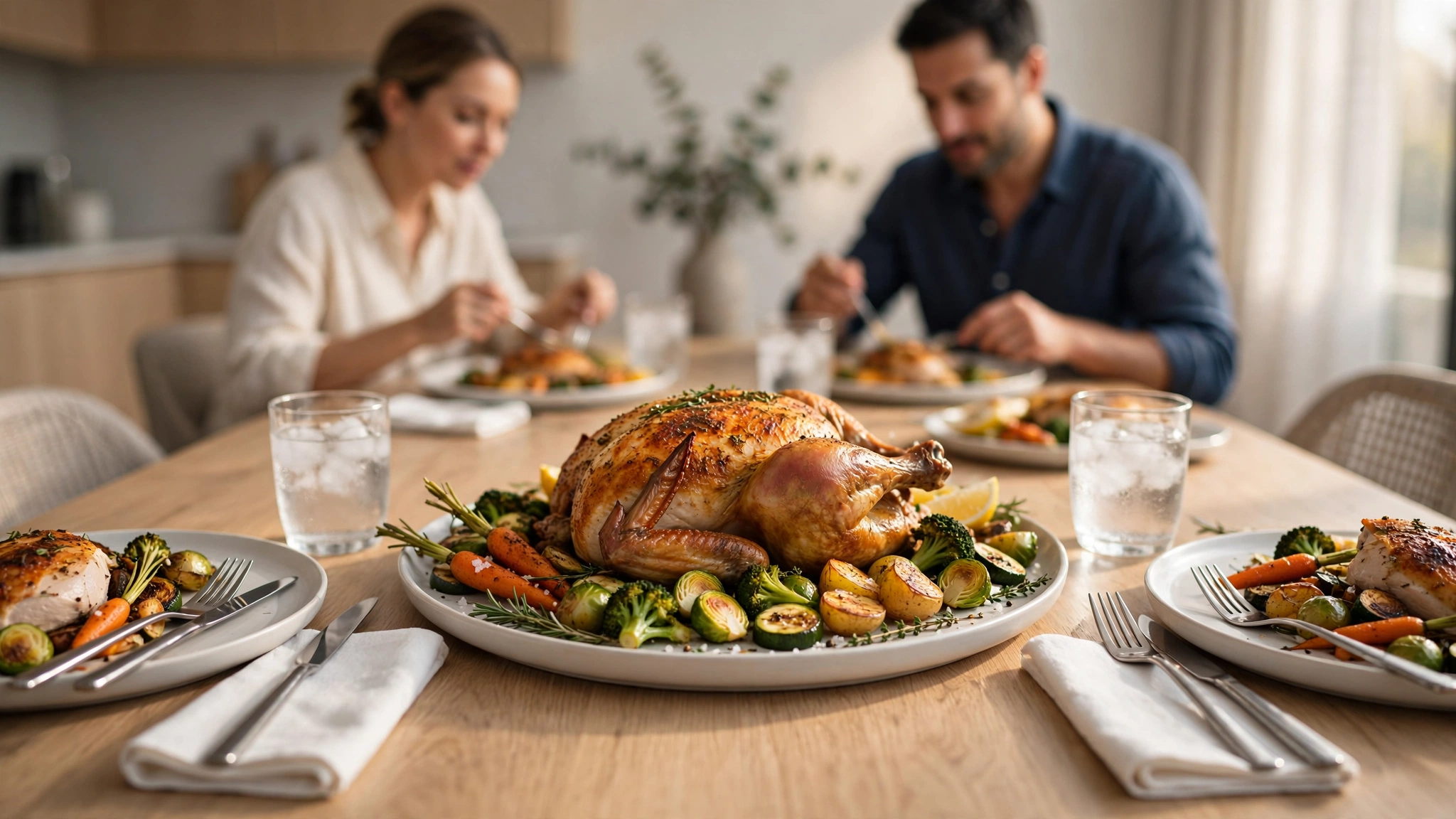
You now know exactly why your dinners failed previously. You have the exact steps to fix them tonight. Stop crowding the metal tray right this minute. Buy a heavy metal pan that never warps. Time your dense ingredients correctly every single time. The results taste completely different when you follow these rules. Your family will ask for these exact meals weekly. Go grab your sharpest knife from the kitchen block. Turn your oven on to 400 degrees right now.

Anna Moretti — Editor-in-Chief & Founder
Anna Moretti is a Le Cordon Bleu graduate whose seven years in Michelin-starred kitchens across Paris and London, including stages at L’Arpège and The Ledbury, shape every recipe she touches. Her work has appeared in Bon Appétit, Saveur, and The Kitchn. As Editor-in-Chief, Anna develops each signature recipe herself and tests it three times before publication, guided by a simple belief: if a recipe doesn’t work in a tired home cook’s kitchen at the end of a long Tuesday, it isn’t ready. She reviews every piece of content for accuracy, voice, and the small details that turn a good recipe into a great one.